Neutrality as Afghanistan’s Missing Path to Peace
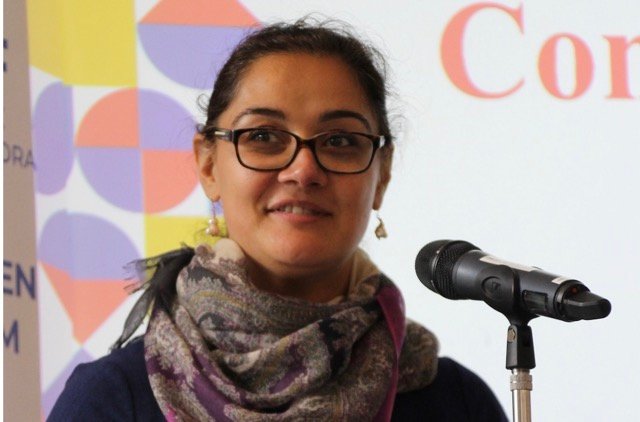
Peace and Reconciliation Researcher - Heela Najibullah. Photo: @Ali Ahmad for ADN
In a statement posted on her X account titled “current perspective on the recent development in Afghanistan,” peace and reconciliation researcher Heela Najibullah lays out a clear and historically grounded argument for why Afghanistan continues to struggle with instability – and why neutrality may be the only viable path toward a durable peace.
Najibullah begins by revisiting the Geneva Accords of April 14, 1988, a pivotal moment in Afghanistan’s modern history. The Accords – signed between Afghanistan and Pakistan, with the United States and the Soviet Union as guarantors, remain binding under international law. They succeeded in ending the Soviet occupation and briefly allowed Afghanistan to govern itself independently for three and a half years. Yet they failed to secure lasting peace. The deeper reason, she argued, lies in Afghanistan’s abandonment of its neutral foreign policy in 1974.
This shift away from neutrality opened the door to decades of proxy warfare. The 1990s brought devastation: bloodshed, mass migration, insecurity, poverty, and the collapse of political and social institutions. After 2001, Afghanistan became the epicenter of the War on Terror, a conflict whose consequences continue to shape the country’s political and social landscape. Even today, many Afghans question whether that chapter has truly ended.
Najibullah’s assessment of the present is equally sobering. Afghanistan today lacks a functioning rule of law. Girls are barred from education, women are excluded from public life, civic spaces have nearly disappeared, poverty has deepened, and millions remain displaced. Violence across the disputed Durand Line further undermines Afghanistan’s sovereignty and territorial integrity. If this pattern continues, she warned, instability will not only persist but spill across the region.
Yet the heart of her message was not despair; it was strategic clarity. Afghanistan’s geography has always made it vulnerable to external interference. As global power dynamics shift – marked by U.S.–China–Russia rivalry and regional tensions – Afghanistan risks becoming once again a battleground for competing interests. In this context, neutrality is not merely a diplomatic preference; it is a protective shield.
Najibullah pointed to history: Afghanistan remained peaceful during both World Wars precisely because it maintained neutrality. Switzerland’s experience demonstrates how neutrality, once recognized, can anchor national stability and international cooperation. Neutrality, she argued, is not a foreign concept for Afghanistan but a “proven pathway ahead.”
Najibullah’s vision is forward‑looking. A neutral Afghanistan could become a hub for regional connectivity, a promoter of peace, a counterweight to violent extremism, and a country capable of building a poverty‑free future. But neutrality cannot be achieved unilaterally. It requires consensus among major powers. As she emphasized, a durable peace in Afghanistan is impossible “unless and until the great powers are in consensus on the future status of Afghanistan.”
Najibullah reinforced this position in a separate remark posted alongside her statement, noting that “not all forms of participation serve the country’s long-term interests.” She explained that choosing not to take part in certain international discussions is a deliberate decision – one meant to preserve clarity of purpose and independence of voice at a time when narratives around Afghanistan risk becoming fragmented. Her approach, she stressed, remains anchored in long-term stability, national interest, and the principle of neutrality.
The cost of continued geopolitical competition will not be borne by Afghans alone; it will reverberate across the region and beyond. In a world undergoing tectonic shifts, Afghanistan’s neutrality could serve not only its own people but also the broader international community.
Najibullah’s message urges global and regional powers to reconsider Afghanistan’s future through a lens that history has proven effective. What the country needs now is not another proxy war, but a durable and inclusive peace anchored in neutrality.