A Voice without a Country: Dewa Niazai’s Unfinished Struggle
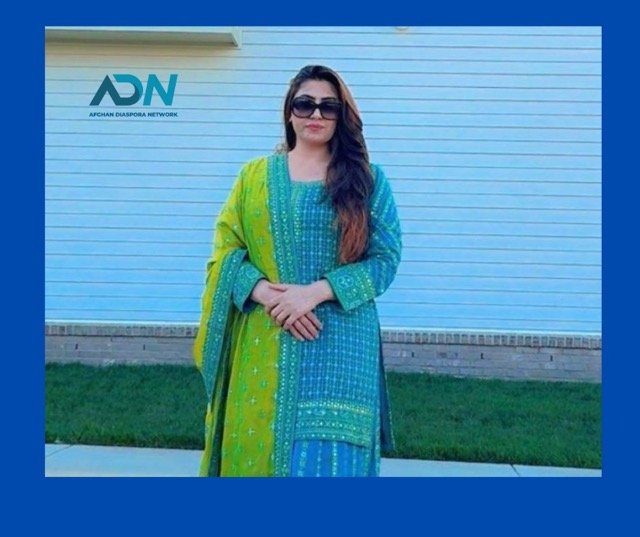
Afghan women's rights activist - Dewa Niazai. Photo: @Dewa Niazai for ADN
By Abdul Wakeel Attock
Dewa Niazai’s political life did not begin with power, wealth, or elite backing. It began with conviction – and that, in Afghanistan, often proves to be a liability. A former journalist who worked with Nargis Radio in eastern Nangarhar from 2011 to 2013, and later an outspoken women’s rights activist, and parliamentary candidate, Niazai’s trajectory reflects the structural barriers Afghan women face when they challenge entrenched systems of power. After spending several years in India between 2013 and 2018, she returned to Afghanistan to run in the parliamentary elections. Today, living in Virginia, the United States, she remains a sharp critic of both Afghanistan’s former political order and the Taliban regime that replaced it.
Her failed bid for parliament stands as a defining moment. Niazai ran without the protection of political dynasties or financial networks, relying instead on grassroots support. When she lost, she publicly accused local election authorities in Nangarhar of accepting bribes. Rather than retreat, she launched a hunger strike to demand a special court and an investigation into electoral fraud. The response was swift and symbolic: her protest tents were dismantled, her sit-in dispersed, and the president never met her.
“My strike produced no result,” she says, but insists the action mattered. It was an attempt to honor voters who trusted her and to expose a system where access to parliament depended less on ballots than on money and influence. Her experience reveals a deeper truth about Afghanistan’s pre-2021 political order: elections existed, but justice and accountability were selective, and women without patronage were especially vulnerable.
Journalism and Defamation
Before politics, journalism gave Niazai a public voice. As a teenager, she trained for six months before joining Nargis Radio, fulfilling a childhood dream of working in broadcast media. Journalism, for her, was not neutral reporting – it was confrontation. Exposing corruption and fraud became central to her work, and she describes those years as the most meaningful of her professional life.
Yet visibility came at a price. Like many Afghan women in public roles, Niazai became the target of defamation. Her studies in political science in India were distorted into rumors questioning her morality and credibility. False narratives spread rapidly online, and once circulated, proved nearly impossible to undo. She insists the accusations were untrue: she lived with family, focused on her studies, and continued advocating for Afghan women through social media.
This pattern of character assassination is familiar in Afghan politics. Gendered defamation has long functioned as a tool to silence women, particularly those who refuse to conform to traditional roles. For Niazai, the attacks were not incidental – they were structural, reinforcing the boundaries of who is allowed to participate in public life.
Politics, she says, is like fire: too close, it burns; too far, it draws you back. Despite everything, she has not fully abandoned the idea of returning – if Afghanistan one day allows women meaningful space again.
Exile, the Taliban, and a Future Denied
Today, Niazai lives in the Afghan diaspora in the United States. Materially, life is stable: food, income, and family support are present. Emotionally, it is a different story. Exile, she says, feels like a lack of oxygen. In Afghanistan, life was harder but less stressful; social bonds softened hardship. In the diaspora, security comes with constant pressure – rent, work, credit, and the absence of collective patience.
Her critique of the Taliban is uncompromising. She does not believe the regime will reverse its policies on women. Years of bans on girls’ education, restrictions on work, and exclusion from public life have convinced her that the ideology is fixed.
“If they (Taliban) wanted to change, they would have done it already,” she argues. In her view, the Taliban deny women not only human rights, but also rights rooted in Islamic tradition.
Her personal losses mirror this reality. A women’s cricket team she once supported in Jalalabad was dismantled, and those involved were persecuted simply for working under a woman’s leadership. Even symbolic association with women, she notes, is treated as a threat under Taliban rule.
Yet Niazai does not place all the blame externally. While acknowledging that global powers pursue their own interests, she holds Afghanistan’s political leadership responsible for squandering opportunities and failing to protect the country’s future. Blaming outsiders, she argues, obscures domestic accountability.
Dewa Niazai’s story captures a broader Afghan reality: a generation of women who spoke, organized, and participated – only to be pushed into exile. Her life now exists between memory and uncertainty, between a homeland that no longer permits her presence and a diaspora that cannot fully replace it. What remains is her voice, and with it, a refusal to accept silence as destiny.
Afghan poet Wakeel Attock previously served as the director of culture for the eastern provinces of Laghman and Nooristan.
Note: The contents of the article are of sole responsibility of the author. Afghan Diaspora Network will not be responsible for any inaccurate or incorrect statement in the articles.