Who Speaks for Afghan Women?
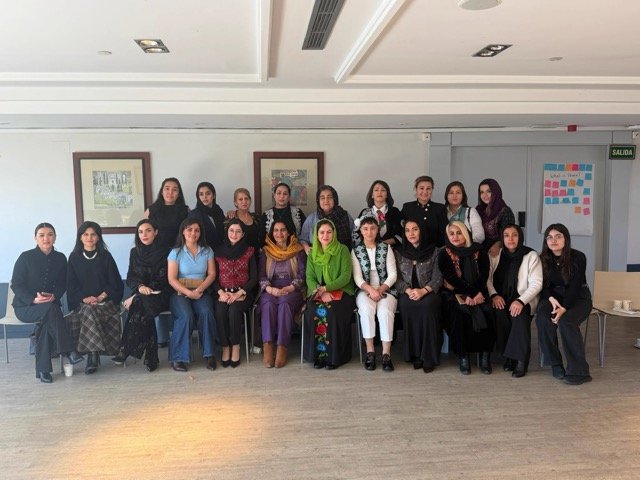
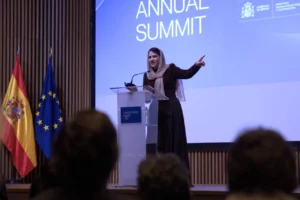
Participating women in Madrid HearUs summit, November 2026.
As governments, foundations, and international organizations continue to fund Afghan-focused initiatives, questions emerge about oversight, evaluation, and measurable impact.
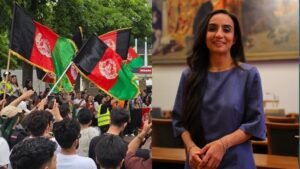
Since the Taliban’s return to power in August 2021, Afghan women have become one of the most visible causes in international human rights advocacy. Conferences, campaigns, petitions, and media appearances have brought Afghan women activists to international platforms from Washington and Brussels to Madrid and Geneva. The attention has helped keep Afghanistan on the global agenda at a time when many geopolitical crises compete for international attention.
Yet a difficult question is increasingly being asked within Afghan diaspora circles: Who speaks for Afghan women, and who decides?
The question surfaced again following the recent HearUs Summit in Madrid, where Afghan women leaders and international officials called for accountability for the Taliban’s restrictions on women and girls. While few dispute the severity of the situation inside Afghanistan, some Afghans are beginning to debate issues of representation, transparency, and accountability within the advocacy sector itself.
Over the past five years, a relatively small number of activists, organizations, and public figures have become the most recognizable voices of Afghan women on international stages. Many have worked tirelessly under difficult circumstances and deserve recognition for drawing attention to the plight of women under Taliban rule. Without their efforts, Afghanistan might have disappeared even further from the international agenda.
At the same time, visibility raises questions.
Who selects the representatives invited to international conferences? Which organizations speak on behalf of Afghan women? How are priorities determined? Do these voices reflect the diversity of women living inside Afghanistan, in neighboring countries, and across the diaspora?
These questions are not an argument against advocacy. Rather, they concern accountability, a principle frequently invoked in discussions about Afghanistan.
Recent comments by former Afghan diplomat Omar Samad have added to the debate. Writing on social media, he questioned whether some of the problems associated with aid and accountability during the republic period could be reappearing within parts of the diaspora advocacy space. He emphasized the need for independent scrutiny while warning against conflating legitimate activism with potential misconduct.
Such concerns are not entirely new. During the two decades of international intervention in Afghanistan, allegations of corruption, weak oversight, and ineffective aid spending became recurring themes. Today, as international funding increasingly supports advocacy, documentation, education, and human rights initiatives linked to Afghanistan, some observers argue that transparency should remain a priority.
The discussion also extends to donors themselves. As governments, foundations, and international organizations continue to fund Afghan-focused initiatives, questions emerge about oversight, evaluation, and measurable impact. How are resources allocated? What outcomes are being achieved? How are beneficiaries identified and verified?
None of these questions lessen the urgency of defending Afghan women’s rights. The Taliban’s restrictions on education, employment, and public participation remain the central issue. But accountability cannot be selective. If Afghan activists call for accountability from the Taliban, the same principle should also strengthen trust within advocacy networks themselves.
For the Afghan diaspora, the challenge is not whether Afghan women deserve representation. They clearly do. The challenge is ensuring that representation remains transparent, inclusive, and accountable.
As Afghanistan’s future continues to be debated abroad, the conversation may increasingly move beyond who speaks for Afghan women to a more fundamental question: how can advocacy remain both effective and accountable to the people in whose name it is conducted?