From Refugee to Bavarian Political Voice
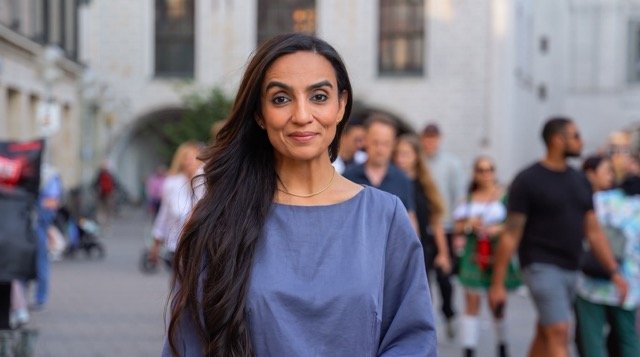
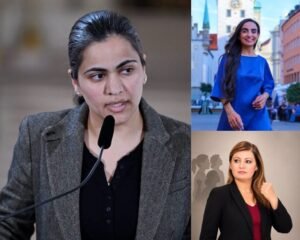
From refugee to public service: Fifteen years after arriving in Germany, Mursal Noorzai is active in Bavaria's political life and serves on migration advisory bodies.
“I realized that without German, I could not move forward.”
When Mursal Noorzai, 35, arrived in Germany in 2011, she was carrying far more than the usual challenges faced by newcomers. Alongside the difficulties of adapting to a new language, culture, and uncertain future, she was recovering from an abusive marriage that had left her partially paralyzed and struggling with severe psychological distress, including suicidal thoughts.
Fifteen years later, she sits on migration advisory bodies and is active in Bavaria’s political life, an unusual journey for someone who spent much of her early life as a refugee.
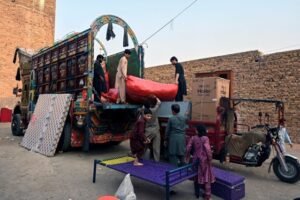
Born in Afghanistan, Noorzai left the country as a six-month-old baby with her family during the civil war in 1992 and grew up in Pakistan. After moving to Germany, she initially struggled with everyday adjustments.
One lesson came unexpectedly.
She remembers taking a jacket to a laundry and speaking English to the woman behind the counter. The woman replied that she did not speak English.
Whether that was true or not, the message was clear.
“I realized that without German, I could not move forward,” Noorzai says.
Language became her first priority. She worked her way through intensive German classes and reached advanced proficiency. Looking back, she considers that decision pivotal to her integration.
She also chose to remain in Bavaria rather than move permanently to Berlin, despite opportunities elsewhere. Munich reminded her of Islamabad, where she had spent much of her youth. The landscape, the mountains, and the slower pace of life felt familiar.
Her commitment to integration gradually drew her toward public service.
“I always wanted to give something back to the society where I live,” she says.
That desire eventually led her into politics.
Many people were surprised when a Muslim Afghan woman joined the Christian Social Union (CSU), Bavaria’s conservative political party.
For Noorzai, however, the decision was practical rather than symbolic.
She says she was attracted by messages emphasizing social responsibility, integration, civic participation, and respect for rules and institutions.
“Working, integration, and respecting the law are important for everyone,” she says.
Within a few years, she became active in local party structures and later joined a migration advisory board, where she helps address issues affecting migrant communities.
Her professional background as an economist and migration consultant complements that work. She says understanding both migrant communities and German institutions allows her to serve as a bridge between the two.
Noorzai believes successful integration requires effort from both newcomers and host societies. Migrants need opportunities to learn the language and participate fully, while governments should reduce bureaucratic obstacles that prevent people from contributing.
One issue she frequently highlights is the slow recognition of foreign qualifications.
Many Afghans arrive with education and experience but spend years navigating administrative procedures before they can continue their careers.
She is equally concerned about the psychological toll created by prolonged uncertainty.
“People wait for papers, cannot work, and cannot plan their future,” she says. “This creates pressure, especially for young people.”
Despite these challenges, she remains optimistic.
She points to numerous examples of Afghans who have successfully built businesses, community organizations, and professional careers throughout Germany.
Her own story reflects that optimism.
From a refugee family displaced by war to an active participant in Bavarian politics, Noorzai sees civic engagement as both a right and a responsibility.
Her message to fellow Afghans is simple:
“Learn your rights. Learn your responsibilities. And become active members of society.”