The Price of Apathy: Afghanistan’s Compounding Crisis
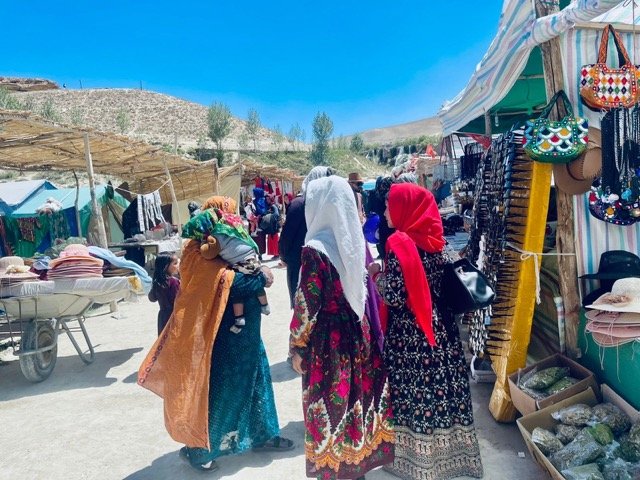
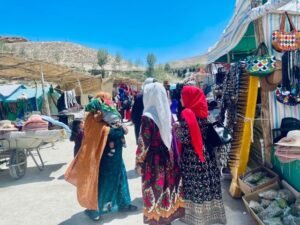
A local market in Central Bamiyan province. Photo: @AADIL for ADN
More than 50 percent of women-led civil society organizations have not received any new funding since last year, and due to the lack of funding, they have lost more than 92% of their staff.
By Arefa Paika
In August 2021, following the withdrawal of US and NATO forces from Afghanistan, not only did the constitutional order founded on the rule of law and citizens’ rights collapse, but Afghanistan was also cut off from much of the international community. The peace negotiations that were intended to end decades of conflict and enable Afghanistan to remain an active member of the international community ultimately culminated in the Taliban’s return to power on 15 August 2021. The collapse of the Afghan republican government, which had received substantial support from the international community to build institutions, establish systems of good governance, and develop a framework of civil laws, made it seem as though those twenty years of progress had been nothing more than an illusion.
The collapse of the republican system imposed enormous costs on all segments of Afghan society, but women and girls have borne the overwhelming burden of these consequences. Just twelve days after the withdrawal of foreign forces from Afghanistan, the first decree targeting women’s rights was issued, banning girls above the sixth grade from attending school until further notice. Since then, the issuance of such decrees has continued, with their number now exceeding one hundred. Collectively, these measures have affected every aspect of women’s and girls’ lives, effectively excluding them from social, educational, economic, and public life.
Since August 2021, Afghanistan has become a country in which approximately 45 percent of the population requires humanitarian assistance to survive. To provide this assistance, the Afghanistan Humanitarian Fund requires USD 1.71 billion in funding. However, by the end of May this year, the United Nations had received only USD 269 million. This substantial funding gap places the lives of millions of people, particularly women, girls, children, and other vulnerable and marginalized groups, at grave risk.
Despite the near collapse of public services, with government functions largely suspended or reduced to a limited range of administrative activities, the policies of Afghanistan’s two neighboring countries have further exacerbated the humanitarian crisis. Since 2023, Iran and Pakistan have collectively expelled more than six million Afghans, doing so at a time when people inside Afghanistan are already facing severe unemployment and increasingly desperate living conditions. The systematic exclusion of women and girls from education and employment has further driven many Afghans toward high-risk migration, while opportunities and prospects within the country have become increasingly constrained.
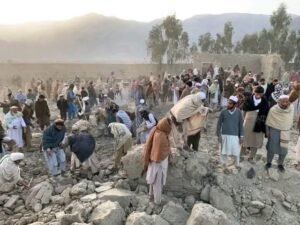
In the 2023 earthquake in Herat, western Afghanistan, more than 2,000 people lost their lives, with women and girls accounting for more than 90% of the casualties. The high number of female casualties was attributed to their presence inside their homes due to existing restrictions. Based on direct interviews conducted with women and girls, the findings indicate that women in Afghanistan leave their homes approximately twice a month. In another major earthquake in eastern Afghanistan in 2022, more than 1,000 people lost their lives and over 2,900 were injured. Earthquake-affected people and families affected by the recent floods across Afghanistan have lost everything, and rebuilding their lives in various dimensions requires greater investment in the Afghanistan Humanitarian Fund.
In addition to recurrent droughts, the country has experienced devastating and unpredictable floods, resulting in irreparable human and economic losses and imposing a heavy toll on thousands of people, particularly women, children, and people with disabilities. The policies enforced by the Taliban’s so-called morality police, through which women and girls have been systematically denied their rights to work, education, and participation in public life, combined with the absence of an internationally recognized government in Afghanistan, have created conditions in which families are increasingly resorting to harmful social practices that were prohibited under Afghanistan’s Constitution and international human rights principles. One of the most devastating manifestations of this condition is the sale of girls and the forced marriages of young girls in exchange for money. Numerous deeply disturbing reports published by international mediahave documented cases in which families, having exhausted their means of survival and seeing no viable alternatives, have compelled their child daughters, many of whom have been deprived of access to school, to enter into forced marriages in exchange for financial payment.
Child marriage further compounds Afghanistan’s already complex and multidimensional humanitarian crisis. Afghanistan continues to have one of the highest maternal mortality rates in Asia and globally. According to data from the United Nations humanitarian coordination body (OCHA) in Afghanistan, 638 mothers die for every 100,000 live births. The impact of restrictions on women’s education and healthcare is significant. Afghanistan has faced a severe shortage of female health workers for decades because of prolonged war and armed conflict, including throughout the two decades of the republic government. However, the Taliban’s return to power and the issuance of restrictive decrees have further limited women’s and girls’ access to education and employment, including in the health sector.
The ban on girls’ education has affected every aspect of women’s and girls’ lives, but its immediate impact on the healthcare system is particularly evident. In its most recent report, UNICEF has warned that, if restrictions on the education and employment of Afghan women continue, Afghanistan could lose more than 5,400 female healthcare workers by 2030. These years alone, 2.4 million girls who were eligible to go to school beyond grade six have been deprived of their right to attend school. Thousands of young women who were studying at Afghan universities as recently as 2021, and those who were on the graduation stages from secondary school, are now watching their hopes and aspirations disappear.
In 2026, 17.4 million people, representing more than one-third of Afghanistan’s population, are facing emergency levels of hunger. The sharp increase of three million people compared to the previous year indicates one of the most severe periods of food insecurity in decades. Acute malnutrition is also worsening, with an estimated 3.7 million children under the age of five and 1.2 million pregnant and breastfeeding women expected to be affected in 2026. The health situation in Afghanistan has long been affected by deep structural inequalities, including decades of conflict, poverty, limited infrastructure, chronic underinvestment, and dependence on aid. Recent political changes have intensified these challenges and created new barriers that severely restrict women’s and girls’ access to healthcare systems and their ability to make independent decisions about their health. Restrictions on women’s work and freedoms across all areas have had profound impacts on Afghanistan’s economy and on the mental and emotional well-being of women and girls. Even if these restrictions are lifted, rebuilding both Afghanistan’s economy and the mental and emotional well-being of women and girls will require years of time and investment. According to surveys conducted by UN Women, the findings point to a crisis. At least 7 out of every 10 women described their mental health as being in a critical condition.
The significant reduction in humanitarian aid, which began by mid-2025 and has unfortunately now become a widespread trend, has affected women and organizations working for women more than anyone else. Women-led organizations providing vital services to women in Afghanistan in the areas of health, education, mental health, and emergency assistance have, despite the restrictions and decrees imposed by the Taliban’s Ministry for the Promotion of Virtue and Prevention of Vice, made innovative efforts to play an effective role in responding to the current crisis.
According to a recent report by UN Women, more than 50 percent of women-led civil society organizations have not received any new funding since last year, and due to the lack of funding, they have lost more than 92% of their staff. At a time when interaction between men and women has been severely restricted across all aspects of society, and when humanitarian assistance has also declined both globally and in Afghanistan, organizations providing services to women have been among those most severely affected. This impact could manifest itself as a multilayered catastrophe across all aspects of the lives of Afghan women and girls who are deprived of their rights to education and employment.
The above is sufficient to demonstrate that the situation in Afghanistan goes beyond a humanitarian crisis. Other countries around the world are also facing humanitarian crises and political instability, but at least in no other country is half of the population prohibited from working, receiving an education, and even participating freely in social life. The multilayered deprivation faced by women and girls is sufficient and compelling justification for the international community to give Afghanistan special attention, from increasing contributions to the Afghanistan Humanitarian Fund to engaging in transparent dialogue with the Afghan people and prioritizing the issue of Afghanistan beyond a sole focus on Afghan migration, which itself is rooted in the continuation of the crisis and instability in Afghanistan.
Addressing the crisis in Afghanistan requires a realistic, transparent, and inclusive approach. The women and girls of Afghanistan, who have borne a multifaceted cost over the past five years, expect any negotiations, dialogue, or responses to take place within the framework of international law, with women’s rights and human rights at the core; furthermore, given the unprecedented nature of the crisis, they expect investment in the Afghanistan Humanitarian Fund to be treated as a priority that goes beyond general approaches.
About the author: Arefa Paika has worked with United Nations humanitarian teams from 2021 to 2025. Before August 2021, she worked in education and higher education in Afghanistan, including with the Ministry of Higher Education, UK-supported girls’ education programs, Education in Emergencies (EiE), and other international organizations. She is a fellow in Women Leadership at the University of Arkansas and has completed research and project-management training with UNITAR and the UNSSC.
Note: The contents of the article are the sole responsibility of the author. Afghan Diaspora Network will not be responsible for any incorrect statements in the articles.