The Rise of the Afghan Diaspora as a Political Powerhouse
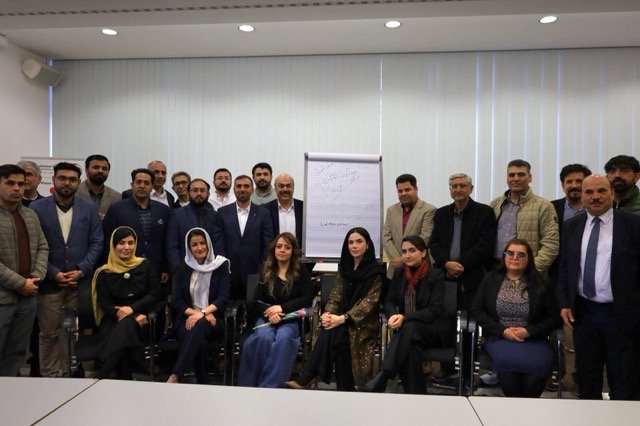
Photo: @Afghanistan Committee for Peace, Reconconstruction and Culture - Berlin
By Kazim Jafari
As the space for dissent vanishes within Afghanistan’s borders, the streets of Berlin are becoming the unlikely front line for the country’s political future.
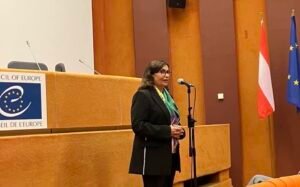
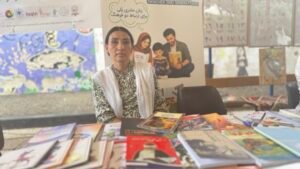
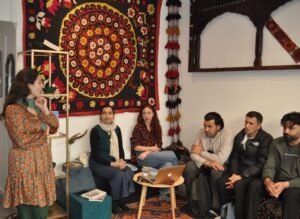
The city’s second “National Dialogue” session held on 11 April 2026 was more than a gathering of 70 academics and activists; it was a testament to an Afghan diaspora evolving into a cohesive political force, a vital sanctuary for the free thought and long-term visioning now silenced at home.
Hosted by the Berlin-based Afghanistan Committee for Peace, Reconstruction and Culture, the event, under the theme “Berlin Connects the Afghan Diaspora” highlighted a burgeoning reality: as domestic political space shrinks, the exile community expands to fill the void. This movement aims not to bypass local actors, but to safeguard the intellectual and moral frameworks essential for any eventual peace.
At the heart of the discussions was a shared conviction that peace without justice is structurally impossible. This idea, articulated most clearly by Meena Jawad, a member of the Afghanistan Committee, reflects a broader diaspora critique of past peace processes that prioritized political deals over accountability. For many participants, justice is not a luxury to be negotiated later; it is the precondition for rebuilding trust in a society fractured by decades of conflict.
The emphasis on justice also revealed a deeper analytical point: the diaspora sees itself as a guardian of principles that risk being erased under current conditions. Whether discussing women’s rights, civic participation, or the right to education, speakers framed these issues not as isolated grievances but as the moral architecture of a future Afghan state.
Another theme running through the session was the reconstruction of dialogue. With public debate inside Afghanistan heavily restricted, diaspora platforms like the National Dialogue have become laboratories for political imagination.
Participants explored how Afghans can rebuild a culture of tolerance and negotiation, not as abstract ideals, but as practical tools for national survival. This reflects a growing understanding that Afghanistan’s crisis is not only political but social: without repairing the culture of coexistence, no political settlement can endure.
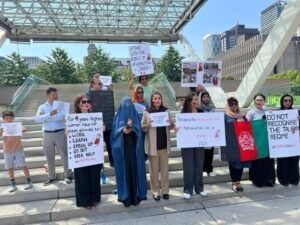
The decision to launch a diaspora‑led campaign under the slogan “Let Afghan Girls Learn” further illustrated this shift from discussion to coordinated advocacy. It positions the diaspora as a moral counterweight to policies that have silenced millions of girls and as a community willing to mobilize its networks for long‑term pressure.
Ultimately, Berlin proved that despite the distance and political fatigue, the Afghan diaspora refuses to disengage. It continues to carve out a space where the ideals of national unity and inclusion are not only imagined but actively defended.
Kazim Jafari is a political science student at the University of Heidelberg in Germany.
Note: The contents of the article are the sole responsibility of the author. Afghan Diaspora Network will not be responsible for any inaccurate statements in the articles.