Pakistan Weaponises Military Conflict With Afghanistan to Dodge Its Saudi Defence Obligations
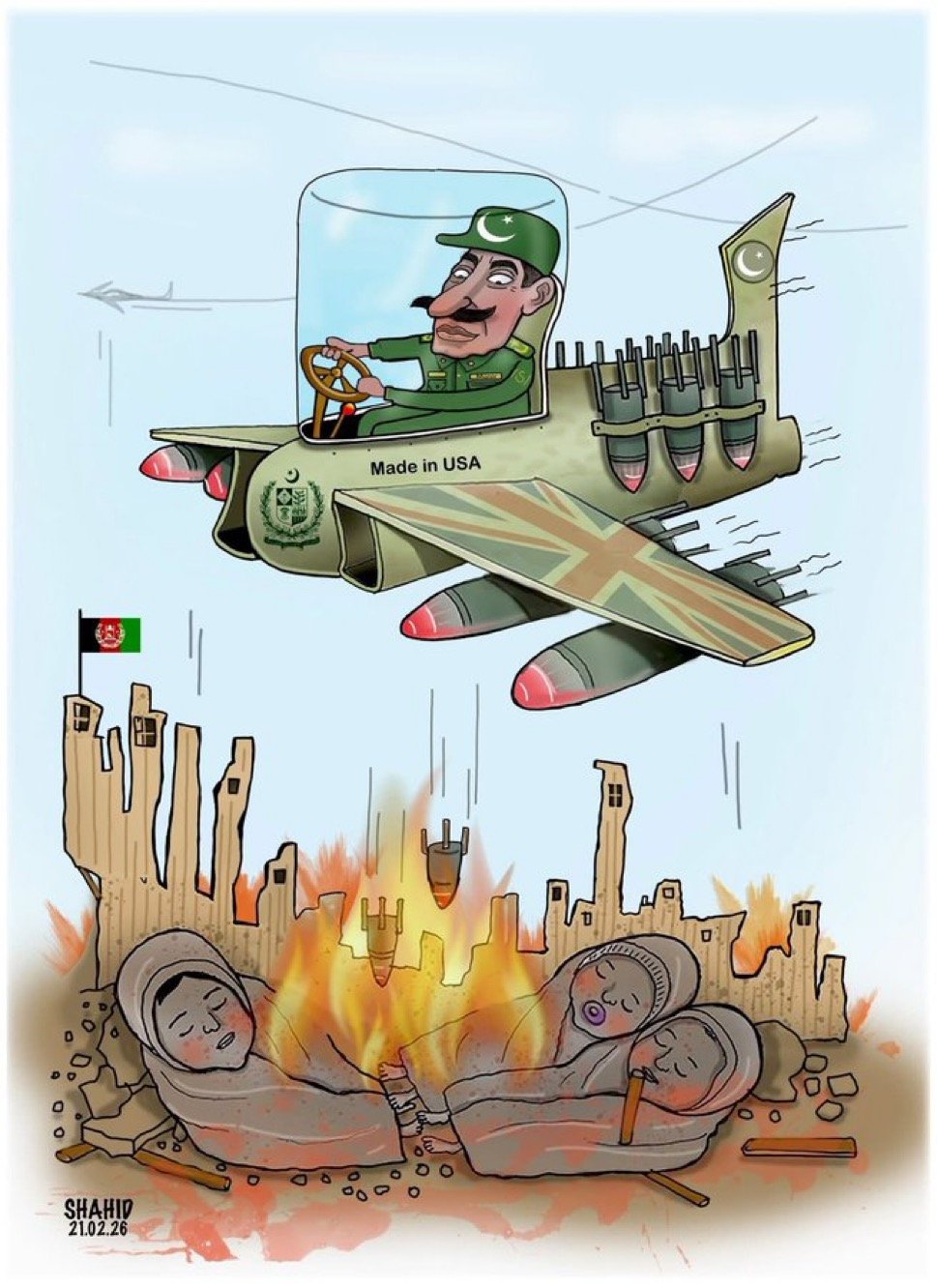
@Atiq Shahid
By Fatima Chaudhary
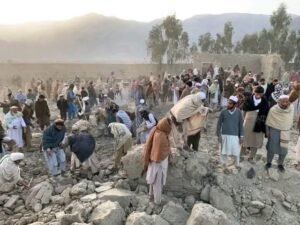
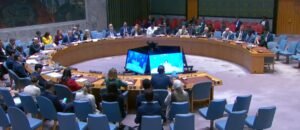
On the night of March 16, 2026, Pakistani warplanes struck the Omid Addiction Treatment Hospital in Kabul, a 2,000-bed drug rehabilitation facility full of patients, resulting in at least 400 civilian casualties, with roughly 250 others injured. As expected, Pakistan tried to dismiss the strike, the international community has widely criticised the barbaric killing of innocent Afghans, which is clearly a case of ‘war crime’. The UN Special Rapporteur on human rights in Afghanistan, Richard Bennett, called for immediate de-escalation between the two countries and condemned Pakistani strikes. This was the latest escalation in what Pakistan has formally declared an “open war” with Afghanistan under Operation Ghazab Lil Haq, launched in late February 2026.
Over three weeks, Pakistani air strikes hit over 51 locations across Kabul, Kandahar, Paktia, Nangarhar, Khost, Paktika, Panjshir, and several other provinces. Pakistan justified this as retaliation for terrorist attacks allegedly linked to the Tahrik-Taliban Pakistan (TTP) and Islamic State Khorasan Province (IS-KP). But the timing raises a sharp question. The full-scale escalation came just days before the United States and Israel initiated military operations against Iran on February 28. As a result, many analysts are questioning whether Pakistan’s ongoing military campaign is really about the TTP, or is it a manufactured crisis to avoid honouring Islamabad’s most consequential defence commitment in decades?
That commitment is the Strategic Mutual Defence Agreement (SMDA) with Saudi Arabia, signed in September 2025 by Crown Prince Mohammed bin Salman and Prime Minister Shehbaz Sharif, with Field Marshal Asim Munir at their side. The SMDA’s central clause states that any aggression against either country shall be treated as aggression against both. Saudi officials described the agreement as encompassing “all military means.” Analysts interpreted this as potentially extending Pakistan’s nuclear umbrella over the Kingdom. Pakistan’s own Defence Minister Khawaja Mohammad Asif initially told the media that all capabilities would be made available, before walking back the statement.
For Riyadh, the pact was about security. For Islamabad, the economic logic was always the dominant driver. Saudi Arabia holds $5 billion in deposits with Pakistan’s State Bank at a subsidised 4 percent interest rate. It provides $1 billion annually through deferred oil payments. Official budget documents for fiscal year 2025-26 projected total Saudi financing of $6.46 billion, making Riyadh Pakistan’s largest external creditor. Remittances from 2.6 million Pakistani workers in the Kingdom totalled $7.4 billion in 2024. The SMDA was the capstone of a strategy to lock in Saudi financial generosity through a defence guarantee.
When US and Israeli forces struck Iran, killing Supreme Leader Ali Khamenei and senior officials, Iran retaliated with missiles and drones across the Gulf. Saudi Arabia was among the badly hit. Iranian projectiles struck Riyadh repeatedly, targeted Aramco’s Ras Tanura facility, hit residential areas in Al-Kharj, killing two people, and attacked the Shaybah oil field. Two drones hit the US Embassy compound in Riyadh, and several drones were intercepted by air defence systems.
Pakistan’s response to Iranian strikes in Saudi Arabia was hollow. Deputy Prime Minister Ishaq Dar told the Senate on March 3 that he had reminded Iran’s foreign minister of the SMDA. But reminding Iran of a treaty is not the same as honouring it.
Islamabad deployed no air defence systems, sent no fighter jets, no interceptor batteries. Instead, it offered to mediate. On March 7, Field Marshal Munir flew to Riyadh for emergency talks with Saudi Defence Minister Prince Khalid bin Salman. On March 12, MBS summoned PM Shehbaz Sharif, along with Munir and Dar, to Jeddah. According to reports, Saudi Arabia explicitly invoked the SMDA to seek Islamabad’s active military participation, and Pakistan kept hedging. The Crown Prince was reportedly deeply frustrated with Pakistan’s reluctance and a clear breach of SMDA.
Pakistan’s excuse has been the ongoing military conflict with Afghanistan, which it initiated unilaterally. Because its forces are heavily engaged against the Taliban, Islamabad argues it cannot spare resources for Saudi defence. Pakistan would likely limit itself to low-level defensive support rather than direct intervention, citing the Afghan war, risk of Iranian retaliation, and domestic sectarian tensions. But this excuse collapses under scrutiny as Pakistan decided to escalate the conflict with Afghanistan and disregarded all mediation efforts. Pakistan’s own Defence Minister warned in February that action would come before Ramadan, but the timing of the escalation, days before the Iran war, looks less like counterterrorism and more like strategic positioning. Saudi Arabia and Qatar, the two previous mediators in the Pakistan-Afghanistan conflict, would be too preoccupied with the Iran crisis to intervene, giving Pakistan a free hand to sustain hostilities without outside pressure.
This is a pattern, not an anomaly in Pakistan’s case. In 2015, when Saudi Arabia launched Operation Decisive Storm against Houthi rebels in Yemen and explicitly asked Pakistan for fighter jets, troops, and naval support, Pakistan’s parliament voted unanimously to remain neutral. That was without a formal defence pact, but it led to a chill in the bilateral relationship. In 2026, the same pattern repeats with a signed defence agreement on the table. Pakistan has long treated its alliances as mechanisms of extraction, and it milked the United States for billions during the war on terror while sheltering the groups America was fighting. China has invested billions through China Pakistan Economic Corridor (CPEC), and Pakistan has struggled to provide basic security for Chinese projects.
Some analysts had described the SMDA as a “commitment trap”f or Pakistan and its invocation was meant to deter Iran. Instead, it exposed Pakistan’s unwillingness to follow through on its commitments and its betrayal of Saudi Arabia’s trust. Therefore, the latest strike at Kabul hospital should be understood in this context. It was not merely an airstrike but a signal aimed as much at Riyadh as at Kabul: that Pakistan is too busy fighting its own war to be available for anyone else’s. The anticipated escalation between the two neighbours will help Pakistan’s generals maintain the fiction that their hands are tied. Saudi Arabia, which bankrolls Pakistan’s economy, deposits billions in its central bank, absorbs millions of its workers, and now finds itself under sustained Iranian attack, has every reason to feel betrayed. For Pakistan, the defence pact with Saudi Arabia appears to have meant nothing more than another promissory note it never intended to honor.
Fatima Chaudhary is a lecturer at a private university in Pakistan’s Punjab province.
Note: The contents of the article are the sole responsibility of the author. Afghan Diaspora Network will not be responsible for any incorrect statements in the articles.