Pakistan’s Mask Comes Off
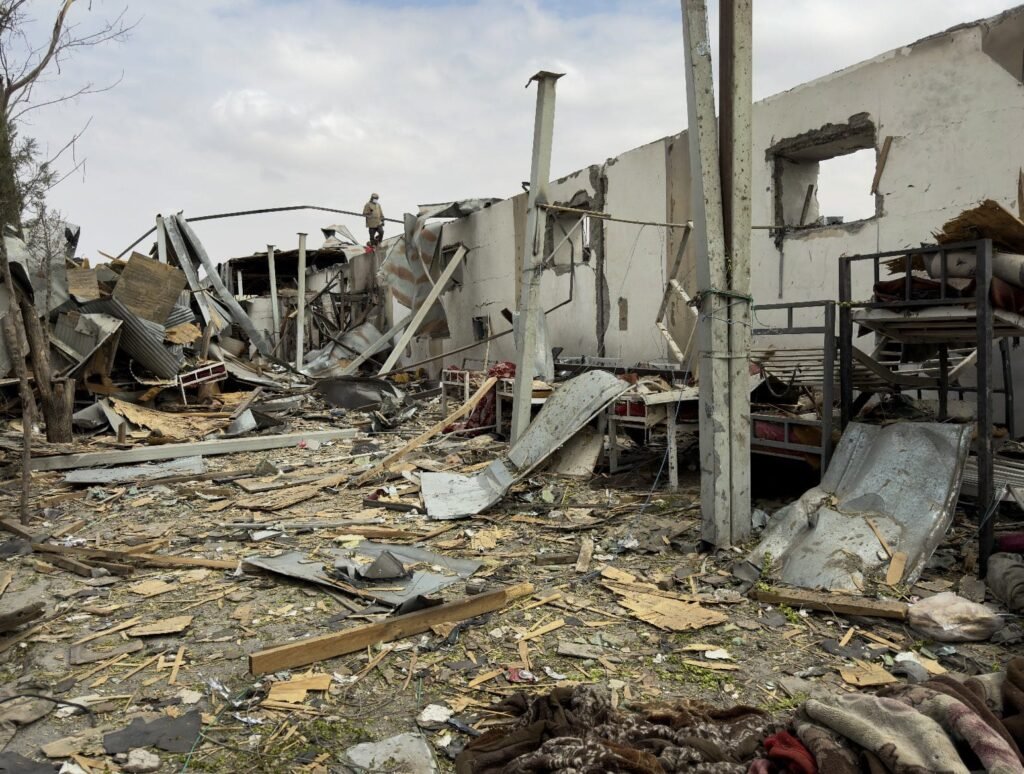
Aftermath of Pakistan’s 16 March airstrike on the Kabul rehabilitation center. Photo: Jan Egeland, Norwegian Refugee Council.
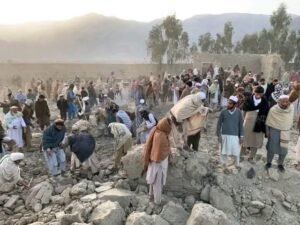
In August 2016, Shahbaz Sharif wrote on his X (former Twitter) that “one cannot imagine anyone stooping as low as to target a hospital… only those bereft of humanity can do that.” Those words now echo with painful irony. Under his leadership on 16 March 2026, Pakistan carried out an airstrike on a rehabilitation center in Kabul — a facility meant to treat drug‑addicted patients — killing reportedly more than 400 civilians and injuring hundreds more. Families had entrusted their loved ones to a place of healing. Instead, they were met with devastation.
The attack has stunned observers across the world. A rehabilitation center is not a military base, nor a contested frontline. It is a sanctuary for some of society’s most vulnerable people. The idea that a state could bomb such a facility has shaken human conscience, particularly among Muslims who question how a country that calls itself “Islamic” could bomb a neighboring Muslim nation.
For many Afghans, this tragedy is not an isolated incident but part of a long, painful pattern. Pakistan’s involvement in Afghanistan stretches back to the Soviet invasion of 1978, and critics argue that its policies have consistently prioritized strategic interests over religious solidarity or humanitarian principles. Expressions of sympathy, they say, ring hollow when measured against actions on the ground.
The Kabul airstrike has once again exposed the human cost of geopolitical maneuvering. Civilians — not combatants, not political actors — bore the brunt of the violence. The families who sent their relatives to be treated for addiction never imagined they would be sending them to their deaths.
This moment has also forced a broader reckoning. It challenges the narratives states use to present themselves as defenders of humanity while engaging in actions that contradict those claims. It raises uncomfortable questions about accountability, responsibility, and the moral obligations of governments — especially those that publicly champion humanitarian causes elsewhere.
For Afghans, the message is painfully clear: their suffering continues to be overshadowed by regional power struggles. The attack on the rehab center is more than a military strike; it is a reminder of how easily civilian lives can be erased in the pursuit of political objectives.
And for the world, it is a test of conscience. If the bombing of a rehabilitation center does not provoke outrage, what will?