Taliban–Pakistan Tensions, Daesh, and the Politics of Narrative

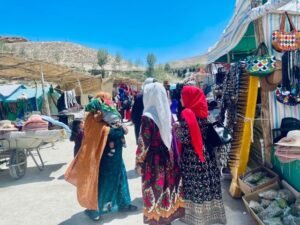
Torkham, Afghanistan's side of Durand Line
By A. Shafaq
When Zabihullah Mujahid, the Taliban’s chief spokesperson, addresses relations with Pakistan, security threats, and regional instability, he is doing more than answering questions. He is constructing a political narrative – one aimed at reframing the Taliban’s past, legitimizing their present rule, and asserting sovereignty in a region where credibility is constantly contested.
In a recent interview with journalist Mirwais Afghan, Mujahid firmly rejected the long-standing claim that the Taliban relied on Pakistan to wage their insurgency against the United States and the former Afghan republic. According to him, the war was fought “from inside Afghanistan,” pointing to active fronts across all provinces as evidence that the movement emerged organically from within society.
This assertion stands in contrast to years of documentation by Afghan officials, international observers, and journalists who recorded cross-border sanctuaries and logistical support. Yet for the Taliban today, denying external dependence is politically necessary. A government seeking recognition cannot afford to be seen as a proxy.
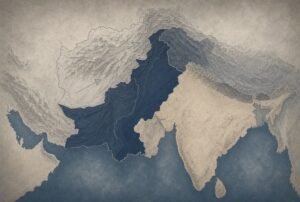
This effort to redefine history is especially visible amid growing tensions along the Durand Line. Mujahid insists Afghanistan did not initiate hostilities and that Taliban forces acted purely in self-defense. He frames Pakistan as externalizing its internal failures – particularly its struggle with Tehreek-e-Taliban Pakistan (TTP) – and attributing them to Kabul. The argument resonates with a familiar Afghan narrative: resistance is not a choice but an obligation when sovereignty is threatened.
Still, this framing glosses over a critical issue: the Taliban’s governance structure offers no transparent mechanisms to independently verify such claims. With no free press, no parliamentary oversight, and no independent investigations, official statements dominate public understanding. The absence of accountability weakens even potentially valid arguments and fuels skepticism beyond Afghanistan’s borders.
On the sensitive question of TTP, Mujahid categorically denies the group’s presence in Afghanistan. He describes those who crossed into eastern provinces as refugees fleeing Pakistani military operations, not militants, and emphasizes that Taliban authorities relocated them away from the Durand Line in coordination with Pakistan and regional mediators such as Qatar, Türkiye, and Saudi Arabia. While Pakistan’s habit of blaming neighbors for internal security problems is well known, the Taliban’s assurances remain unverifiable. Critics argue that ideological overlap between the Taliban and TTP, combined with limited transparency, undermines Kabul’s credibility.
Mujahid extends his critique further, suggesting that elements within Pakistan’s military act on behalf of external powers to destabilize the region. Such claims echo long-standing regional suspicions but also serve another purpose: shifting responsibility outward. By framing instability as a product of foreign manipulation, the Taliban deflect attention from Afghanistan’s own internal weaknesses – economic collapse, diplomatic isolation, and policies that have hollowed out state capacity.
The same pattern appears in Mujahid’s assessment of Daesh. He claims the group has been “isolated and eradicated” inside Afghanistan, arguing that its operational centers existed under the former government and that Taliban forces expelled its fighters across the Durand Line. According to Mujahid, Daesh no longer poses a serious threat, though isolated incidents may still occur. He highlights the scale of Taliban security forces – more than 181,000 personnel, as evidence of growing capacity and independence, contrasting this with states that rely on foreign funding and debt.
While it is true that Daesh has been significantly weakened since 2021, Mujahid’s portrayal of total containment remains questionable. Attacks against religious minorities, former officials, and urban targets have continued, albeit at a lower frequency. Moreover, the Taliban’s refusal to allow independent monitoring makes it difficult to assess the true extent of the threat. Security capacity cannot be measured solely by numbers, particularly in a system where professionalism, intelligence-sharing, and civilian oversight remain limited.
Notably absent from Mujahid’s narrative is any acknowledgment of how Taliban policies themselves affect security and regional trust. The exclusion of women from public life, the dismantling of civil society, and the narrowing of political space weaken Afghanistan internally and reduce its credibility externally. These policies complicate cooperation with neighbors and undermine claims of responsible governance.
Mujahid’s statements reflect a broader tension within Taliban rule. The movement demands recognition as a sovereign government while relying heavily on insurgent-era rhetoric and information control. As disputes with Pakistan continue and security threats persist, the challenge facing the Taliban is not merely military. It is whether they can move beyond narrative management toward transparent governance – where legitimacy is built not only on resistance, but on accountability, inclusion, and trust.
A. Shafaq (pseudonym) is a researcher and lecturer at one of the private universities in Kabul.
Note: The contents of the article are of sole responsibility of the author. Afghan Diaspora Network will not be responsible for any inaccurate or incorrect statement in the articles.