Afghan Prosecutor Who Fled Taliban Now Trapped Under Bombardment in Iran
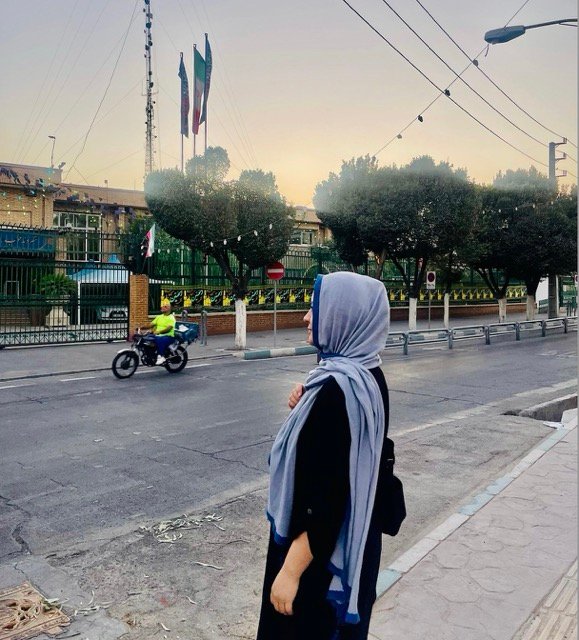
Tehran, Iran - Photo: @private
ADN
Sodaba Sediqi, a 32‑year‑old former prosecutor from Kabul, escaped the Taliban in 2025 hoping to find safety across the border in Iran. Instead, she now finds herself caught in a new and escalating conflict—this time under the bombardments of the confrontation between Iran and the US–Israel alliance. Her experience, first documented in September 2025 by Afghan Diaspora Network (AND), reflected the challenges Afghan refugees face in Iran. Today, her situation has become even more precarious as war reaches the streets and skies of Tehran.
In recent messages to ADN, Sediqi described a life defined by fear, uncertainty, and the absence of any safe alternative. “I am in Tehran and I have nowhere to go,” she wrote. “All our neighbors have fled to distant towns, but we have no place to escape and no hope of surviving.”
Sediqi, who lives with her two young children, says the combination of economic collapse, rising prices, and nightly bombardments has pushed life to the edge.
“Life in Iran has become extremely difficult,” she said. “From one side there is unbearable inflation, and from the other side, the war. At night, because of the explosions near and far, we cannot sleep at all.”
Her account reflects the broader reality facing Afghan refugees in Iran—many of whom fled Taliban rule only to encounter legal precarity, discrimination, and now the dangers of a regional war.
Over the past two years, Sediqi has contacted multiple organizations seeking assistance, but none have been able to offer a path to safety.
“I cannot return to Afghanistan, and I cannot stay in Iran. There is no place left to live,” she said. “We continue only with hope in God.”
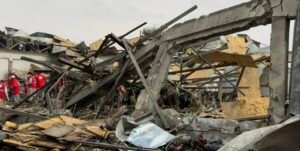
In her latest messages, she described nights filled with the sound of jets and explosions. “From 2 to 4 a.m., the jets came three times,” she wrote. “They bombed several places in our area. It is very dangerous. The windows shake, the house moves, the sky lights up.”
She added that during one exchange, “a jet was flying above us and dropping bombs. My poor children were both crying.”
The conflict has also brought daily life to a halt. “There is no work anymore,” she said. “Everything is closed. They say no one should leave their home.” She recounted a rocket passing over her building with a deafening sound before landing in a nearby park. “It hit so hard that our door opened and closed by itself.”
Her messages also point to the isolation Afghan refugees face. “There is no help or support for Afghans at all,” she wrote. “Life has become unbearable with the war and the high prices.” Even communication is unstable. “The internet barely works. Sometimes it connects after two or three days, then it cuts again.”
Sediqi’s story underscores a growing humanitarian concern: Afghan refugees in Iran are now trapped between two crises. They cannot return to Afghanistan, where the Taliban remains in control, and they cannot safely remain in Iran, where a regional conflict has turned major cities into potential targets.
As geopolitical tensions escalate, the plight of refugees like Sediqi risks being overshadowed. Yet her messages offer a stark reminder that behind every military confrontation are civilians—especially displaced people—who bear the heaviest burden of wars they neither chose nor can escape.
Her final words capture the exhaustion and uncertainty shared by many Afghan refugees in Iran: “We are confused and distressed. We have nowhere to go. We just continue, hoping for safety.”