Taliban–Pakistan Confrontation Escalates After Deadly Strikes and Retaliatory Operations
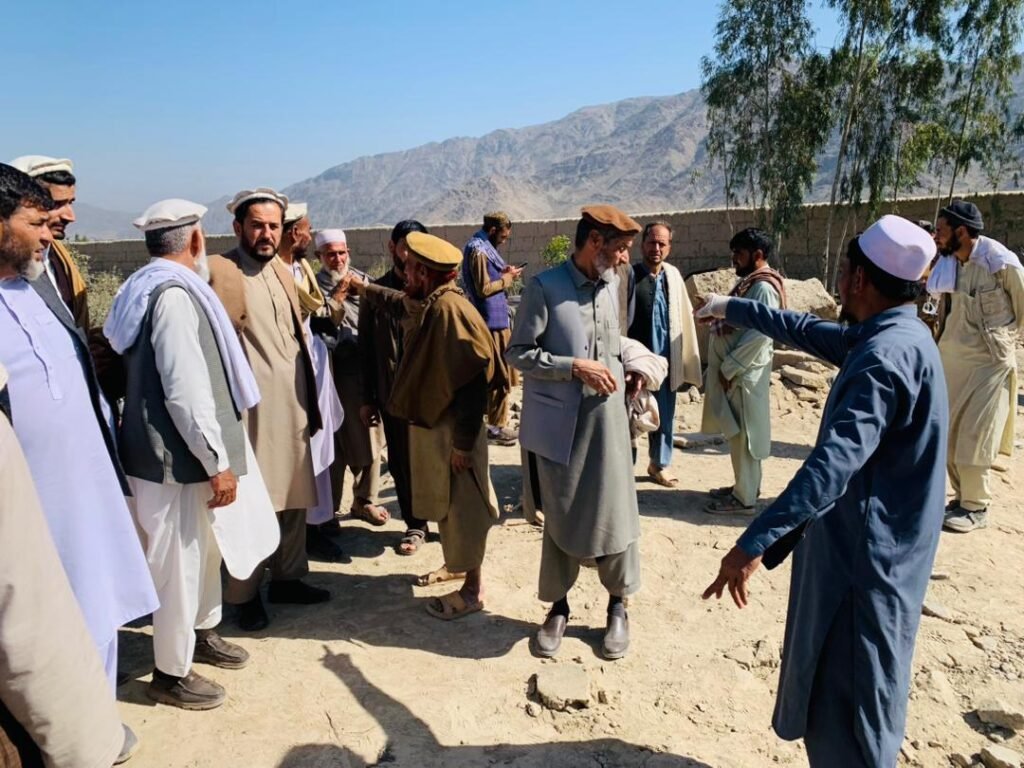
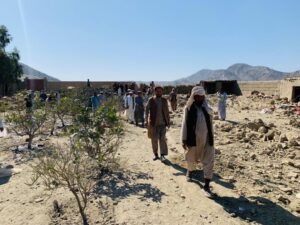
A survivor of the Pakistani airstrike (right, wearing a white cap and with a bandaged hand) describes how the bombing killed most of his family, including women and children. Photo: @ATTOCK
By Kazim Jafari
Tensions between Afghanistan and Pakistan have escalated sharply after a series of “cross‑border” strikes, retaliatory operations, and conflicting claims from both governments. What began with Pakistani airstrikes on Afghan territory earlier this week has now spiraled into the most serious military confrontation between the two sides since the Taliban’s return to power in 2021.
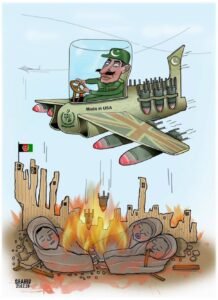
Pakistan said its air operations targeted “terrorist hideouts” in Nangarhar and Paktia provinces, blaming recent suicide attacks inside Pakistan on militants allegedly based in Afghanistan. The Taliban rejected the claim, saying the strikes hit civilian homes, killing women and children. Days later, Afghan forces launched what they described as a coordinated retaliatory assault along the Durand Line.
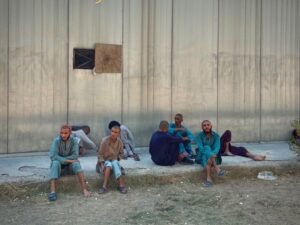
A spokesman for the Taliban’s 201st Military Corps confirmed that “a battle has started against Pakistani forces” in response to the airstrikes. Videos circulating online appear to show Pakistani soldiers captured by Taliban fighters, though these claims remain unverified.
In a lengthy statement, the Taliban’s Ministry of Defense said Afghan forces targeted Pakistani military positions across several border provinces, including Paktika, Paktia, Khost, Nangarhar, Kunar, and Nuristan. The statement claimed that 55 Pakistani soldiers were killed, two bases and 19 checkpoints were captured, and “dozens of weapons and military equipment” were seized. It also acknowledged the deaths of eight Taliban fighters and injuries to 11 others. The Taliban said the operation ended at midnight on the orders of Chief of Army Staff Fasihuddin Fitrat.
Pakistan, however, has strongly denied suffering major losses. Government spokespersons said the Taliban had “miscalculated” and opened unprovoked fire on multiple locations in Khyber Pakhtunkhwa. Islamabad claims its forces delivered an “immediate and effective response,” inflicting “heavy casualties on the Afghan side” and destroying several Taliban positions. Pakistan’s prime minister’s office dismissed Taliban claims of capturing military posts as “baseless.”
The exchange of fire comes after months of deteriorating relations. Crossings through the Durand Line have been repeatedly closed since deadly clashes in October, and both sides accuse each other of harboring militants.
The confrontation has triggered strong reactions among Afghans in diaspora, including many who oppose the Taliban but view Pakistan’s actions as violations of Afghan sovereignty. Former deputy defense minister Tamim Asey wrote on X that defending Afghanistan’s borders “is the duty of all Afghans, Taliban and non‑Taliban alike,” accusing Pakistan’s military and intelligence services of decades of interference and destabilization.
Veteran journalist Sami Yousafzai echoed similar sentiments, noting that despite deep disagreements with Taliban governance, many Afghans see the group’s military response as the first forceful pushback against Pakistan in decades. “When it comes to national sovereignty and territorial integrity, these issues rise above political differences,” he wrote.
Analysts warn that the situation could escalate further if diplomatic channels remain frozen. Former Pakistani lawmaker Afrasiab Khattak argued that Pakistan’s long-standing security doctrine has failed, saying the country must “quit the role of a front‑line state” and rethink its approach to Afghanistan.
With both sides trading contradictory claims and no sign of de-escalation, the Durand Line crisis risks triggering a wider conflict – one shaped by decades of mistrust, competing security narratives, and the absence of meaningful dialogue between Kabul and Islamabad.
Kazim Jafari is a political science student at the University of Heidelberg in Germany.
Note: The contents of the article are the sole responsibility of the author. Afghan Diaspora Network will not be responsible for any inaccurate or incorrect statements in the articles.