Khawaja Asif’s Admission Exposes Pakistan’s Afghan Dilemma
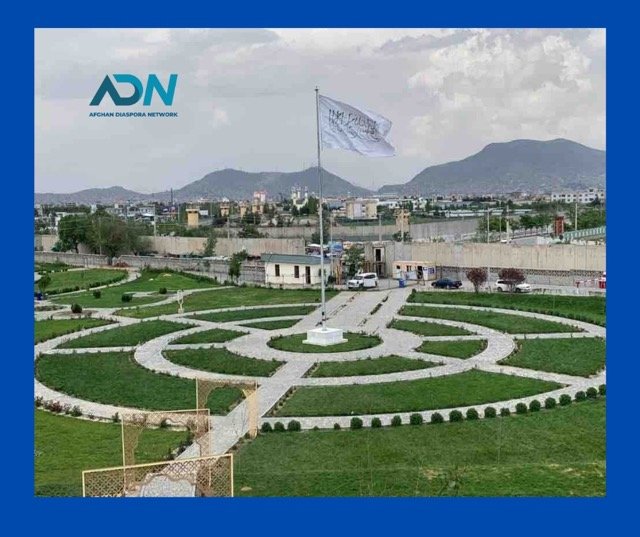
Kabul - Afghanistan, October 2025. Photo by @SS Ahmad for ADN
By Kazim Jafari
Pakistan’s Defence Minister Khawaja Muhammad Asif has ignited a new regional debate after delivering one of the most candid speeches by a senior Pakistani official in years. Speaking in the National Assembly following a deadly suicide attack in Islamabad, Asif not only condemned terrorism but openly acknowledged Pakistan’s decades-long role as a “hired force” in Afghanistan – a rare admission that has unsettled political circles in both countries. His remarks, combined with new accusations from Pakistan’s interior ministry and a widely circulated analysis on social media, reveal a Pakistan struggling to reconcile its past interventions with its present insecurity.
A Rare Admission: Pakistan as a “Hired Force” in Afghanistan
In remarks reported by TOLOnews, Asif stated bluntly that Pakistan spent “22 to 23 years” fighting in Afghanistan not for religious reasons, but to serve Western interests.
“For decades, we were involved in Afghanistan as a hired force,” he said, adding that Pakistan has yet to fully accept this historical mistake and is now repeating it.
He argued that Pakistan’s decision to join the Afghan conflicts – first under General Zia-ul-Haq during the anti-Soviet jihad, and later under General Pervez Musharraf after 9/11 – was driven by the desire for U.S. support, not ideological conviction.
This admission is significant. It challenges the foundational narrative that Pakistan promoted for decades: that its involvement in Afghanistan was a religious duty and a defense of the Muslim world. Asif went further, saying Pakistan even rewrote its education curriculum to align with wartime propaganda, and that the consequences of those decisions continue to shape society today.
Former Afghan diplomat Aziz Marej, quoted by TOLOnews, argued that Asif’s remarks are less about accountability and more about absolving Pakistani officials of responsibility. He said Pakistan’s actions in Afghanistan were driven by financial incentives and form the core of its political conduct – a pattern he believes will continue.
These comments cast doubt on Islamabad’s long-standing claims that its Afghan policy was principled or defensive. They also raise uncomfortable questions about Pakistan’s role in shaping the militant landscape that later spilled back across its borders.
Competing Narratives on Terror Sanctuaries
Even as Asif acknowledged Pakistan’s historical mistakes, he revived familiar accusations against Afghanistan and India. He claimed that India is sponsoring terrorism inside Pakistan and using Afghan territory to wage a proxy war. Pakistan’s interior minister went further, asserting that 21 terrorist groups are based in Afghanistan and that the planning for the Islamabad suicide bombing occurred there.
This claim triggered a strong reaction online, especially after the X account @AfghanAnalyst2, commenting on Afghanistan’s security issues – and whose post was retweeted by former Afghan Vice President Amrullah Saleh – highlighted the cyclical nature of such accusations:
“Pakistani Interior Minister’s claim that 21 terrorist groups are based in Afghanistan… echoes similar cross-border accusations made in 2008 by former Afghan intelligence chief Amrullah Saleh against Pakistan.”
The post also pointed out that while the Taliban have dismantled known Islamic State Khurasan Province (ISKP) cells inside Afghanistan, ISKP-linked networks remain active inside Pakistan, particularly in Bajaur, Khyber Pakhtunkhwa, Nowshera, and parts of Balochistan. This complicates Islamabad’s narrative that Afghanistan is solely responsible for the resurgence of terrorism in Pakistan.
The analysis concluded with a broader regional lesson:
“Counterinsurgency efforts focusing solely on military action are unlikely to succeed without addressing extremist ideology, recruitment pipelines, governance gaps, and regional rivalries.”
This observation resonates strongly today. Pakistan’s renewed accusations against Kabul mirror the same pattern Afghanistan once used against Islamabad – each blaming the other for militancy while struggling to confront internal drivers of extremism.
Asif’s speech also revealed Pakistan’s growing frustration with the Taliban government. He said Kabul, which once aligned with Pakistan’s concerns, is now “reluctant” to provide assurances on counterterrorism. This marks a significant shift: Islamabad once hoped the Taliban’s return would secure its western flank. Instead, relations have deteriorated, and Pakistan now publicly accuses the Taliban of harboring anti-Pakistan militants.
A Moment of Candor Without Real Change
Khawaja Asif’s admission that Pakistan acted as a “hired force” in Afghanistan is one of the most direct acknowledgments of policy failure ever made by a Pakistani minister. Yet his speech also revealed the contradictions at the heart of Pakistan’s Afghan strategy: a willingness to admit past mistakes, paired with a continued reliance on externalizing blame.
For Afghanistan, these remarks are both revealing and troubling. They expose Pakistan’s internal reckoning with its Afghan policy, but also signal a renewed effort to shift responsibility for Pakistan’s security crisis onto Kabul. The competing narratives – Pakistan’s claims of Afghan-based militants and Afghan analysts’ reminders of Pakistan’s own militant networks — reflect a region still trapped in cycles of accusation and denial.
Whether Asif’s candor leads to a genuine policy shift or simply reinforces old patterns remains uncertain. What is clear is that Afghanistan remains central to Pakistan’s political imagination, its security anxieties, and its search for a coherent national identity.
Kazim Jafari is a political science student at the University of Heidelberg in Germany.
Note: The contents of the article are of sole responsibility of the author. Afghan Diaspora Network will not be responsible for any inaccurate or incorrect statement in the articles.