Afghan Girls’ Education Under Siege: Voices From Vienna
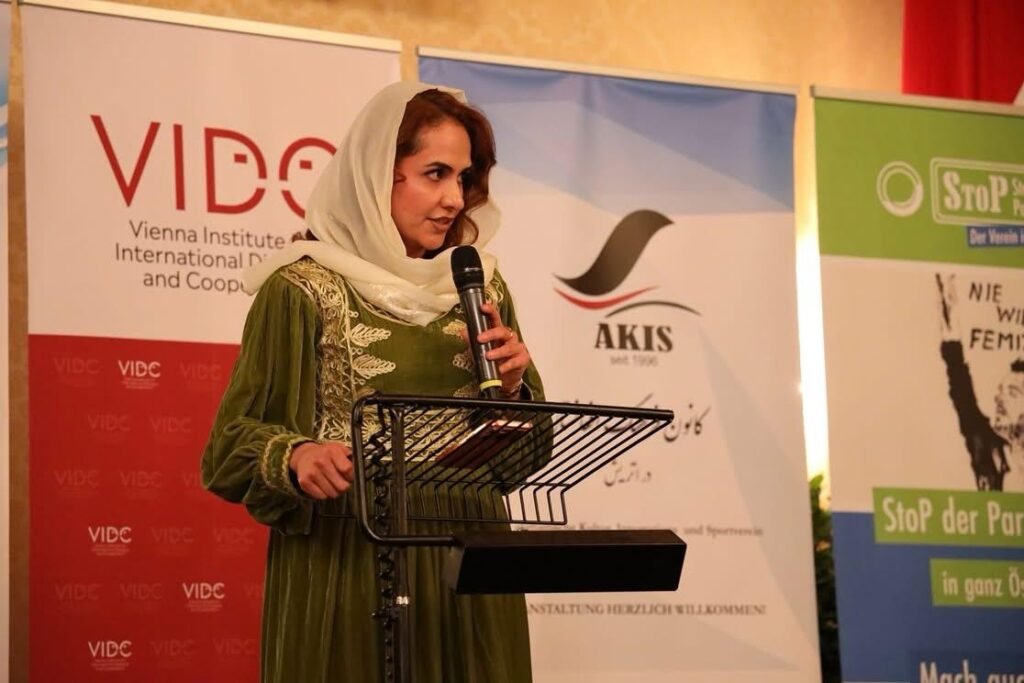
Nargis Mommand Hassanzai, a former lecturer at Kabul University now living in exile in Germany. Photo: @AKIS
By Wakeel Attock
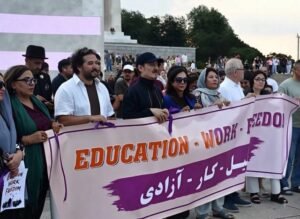
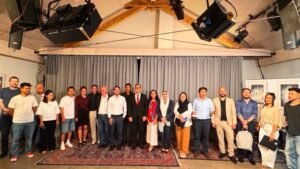
In the heart of Europe, where the echoes of history meet modern diplomacy, Vienna City Hall became a sanctuary for a different kind of resistance on 10 April 2026.
The landmark conference, “Women’s Solidarity for Education and Self-Determination in Afghanistan,” did more than just commemorate the 30th anniversary of the Afghan Cultural Association (AKIS).
Organized alongside the Vienna Institute for International Dialogue and Cooperation (VIDC) and the Vienna Chamber of Labor, the event served as a high-stakes gathering of policymakers, scholars, and the Afghan diaspora, all focused on a singular, urgent crisis: the systematic erasure of women’s rights and education under Taliban rule.
Since the Taliban’s return to power in August 2021, Afghanistan has become the only country in the world where girls are systematically barred from secondary and higher education. International organizations have described these restrictions as unprecedented. Schools and universities remain closed to girls beyond the primary level, and women’s employment in education has been severely restricted.
In many regions, formal schooling has been replaced by madrasa‑based instruction. At the same time, the curriculum is being revised in ways that reduce scientific, social, and critical learning. These changes risk lowering educational quality and narrowing future opportunities for an entire generation.
At the Vienna conference, Nargis Mommand Hassanzai, a former lecturer at Kabul University now living in exile in Germany, delivered a keynote speech that captured both the scale of the crisis and its human impact.
Hassanzai opened with the Qur’anic command “Iqra”—“Read”—to emphasize, in her words, that learning is a moral and religious imperative. By invoking this foundational principle, Hassanzai underscored that the denial of education is not only a political act but a violation of a core value embedded in Afghan culture and Islamic tradition.
Hassanzai illustrated this reality through personal testimonies. She shared the voice of a young girl who once woke up excited for school but now has “nowhere to go.” She also quoted a father of six daughters who can no longer answer their daily question, “When will we go back to school?” By presenting these stories, Hassanzai highlighted the emotional and psychological toll of educational exclusion on Afghan families.
The consequences extend far beyond the classroom. Hassanzai stressed that when girls lose access to schooling, early marriage becomes more common, economic opportunities shrink, and long‑term health outcomes worsen.
She pointed to the severe shortage of female doctors, nurses, and midwives – an outcome directly linked to restricting women’s education and employment. This shortage affects maternal health, child health, and access to basic medical care, creating a ripple effect across Afghan society.
Despite these challenges, Hassanzai emphasized the resilience of Afghan girls. She noted that many continue to study informally, join online classes, or participate in community‑based learning. According to her, Afghan women “continue to learn quietly,” supporting one another even when formal structures collapse. Their determination, she argued, shows that the desire for education cannot be erased by decree.
The conference also highlighted the role of the Afghan diaspora in sustaining educational and advocacy networks. Workshops focused on strategies to support girls’ education in Afghanistan and on improving labor‑market integration for Afghan women in Europe. These discussions reflected the broader theme raised by Hassanzai: that strengthening dialogue and building bridges between Afghanistan and the international community – especially through the diaspora – is essential.
Hassanzai, however, cautioned that conferences alone are not enough. She called for sustained commitment, political will, and concrete action. This includes expanding scholarships for Afghan girls, investing in digital and alternative education, and supporting Afghan educators both inside the country and in exile. Her message echoed a broader consensus among experts: reversing the educational rollback in Afghanistan will require coordinated international support and long‑term engagement.
The Vienna conference shows that while the Taliban’s restrictions have created profound barriers, Afghan women continue to assert their right to learn, teach, and participate in society.
As Hassanzai concluded, the world is no longer unaware of the crisis. The real question is what actions will follow. Her speech served as both a warning and a call to action: denying education to millions of girls is not only a violation of rights but a threat to Afghanistan’s future. Restoring education is therefore not simply a policy demand – it is a moral imperative.
The Vienna conference made one thing clear: Afghan women’s voices remain strong, even in exile. Their struggle for education continues, and their determination ensures that the call of “Iqra” – to read, to learn, to grow – will not be silenced.
Afghan poet Wakeel Attock previously served as the director of culture for the eastern provinces of Laghman and Nooristan.
Note: The contents of the article are the sole responsibility of the author. Afghan Diaspora Network will not be responsible for any inaccurate statements in the articles.