RSF 2025: Press Freedom Collapses in Afghanistan, Pakistan, and Iran
Photo by @Ali Ahmad for ADN
By A. Shafaq
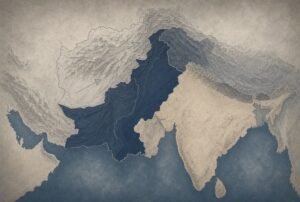
The 2025 World Press Freedom Index by Reporters Without Borders (RSF) offers a stark assessment of the media landscape across South and Central Asia, where Afghanistan, Pakistan, and Iran remain among the most repressive environments for journalists. While RSF’s global report highlights economic fragility as a growing threat to press freedom, the situation in these three countries is shaped by entrenched political control, systematic censorship, and the erosion of independent journalism. Together, they illustrate a regional pattern in which information is tightly controlled, dissent is punished, and journalists operate under constant threat.
A Region Where Journalism Is Systematically Constrained
Afghanistan, ranked 175th out of 180, represents one of the most extreme cases of media repression in the world. According to RSF, the Taliban have imposed a system of institutionalized censorship that leaves virtually no room for independent reporting.
Since the Taliban takeover in 2021, more than half of the country’s media outlets have shut down, and women journalists have been pushed almost entirely out of the profession. Newsrooms operate under direct surveillance by the Taliban’s intelligence services, and journalists face arbitrary detention, intimidation, and violence for reporting on sensitive topics.
RSF notes that Afghan media are required to broadcast content aligned with the regime’s ideological and political priorities, effectively eliminating pluralism. Economic collapse has further weakened the sector, making surviving outlets financially dependent and more vulnerable to political pressure. The result is a media environment where information is tightly controlled and the public has limited access to independent news.
Pakistan, ranked 158th, faces a different but equally structural crisis. RSF describes Pakistan’s media system as one where state institutions, political actors, and economic pressures jointly restrict journalistic independence. While Pakistan has a large and diverse media sector, the space for critical reporting has narrowed significantly.
Journalists in Pakistan face legal harassment, intimidation, and targeted online abuse, particularly women reporters.
Defamation laws, cybercrime regulations, and administrative pressure are frequently used to silence dissent. Coverage of the military, security issues, or political corruption remains especially risky.
Economic fragility plays a central role: many media outlets depend on Pakistan’s government advertising or operate under financial strain, leading to widespread self‑censorship. RSF notes that the combination of legal threats and economic pressure has created a climate where journalists must navigate a complex web of red lines, and public debate is increasingly constrained.
Iran, ranked 176th, remains one of the world’s harshest environments for journalists. RSF describes Iran as a “black hole for news and information”, where the state maintains near‑total control over media and communication. Journalists face arbitrary arrest, forced confessions, torture, and long prison sentences.
Iran is consistently among the world’s largest jailers of journalists, with dozens currently imprisoned. Foreign media are banned, domestic outlets operate under strict ideological supervision, and online platforms are heavily censored. Digital surveillance is pervasive, and independent reporting is criminalized.
RSF notes that the Iranian authorities systematically block access to information and punish journalists who attempt to report on political repression, corruption, or social unrest. The result is a media environment where free journalism is effectively impossible and where the state’s narrative dominates public life.
Taken together, Afghanistan, Pakistan, and Iran illustrate a broader regional trend: press freedom is collapsing under the combined weight of political repression and economic fragility. Although the mechanisms differ—ideological control in Afghanistan, institutional pressure in Pakistan, and authoritarian repression in Iran—the outcome is similar: shrinking space for independent journalism and growing risks for those who attempt it.
RSF’s 2025 index makes clear that without structural reforms and stronger protections for journalists, the region will continue its slide toward deeper information darkness.
A. Shafaq is a researcher and lecturer at one of the private universities in Kabul.
Note: The contents of the article are the sole responsibility of the author. Afghan Diaspora Network will not be responsible for any incorrect statements in the articles.