Afghan Leaders Push Back Against Pakistan’s Narrative
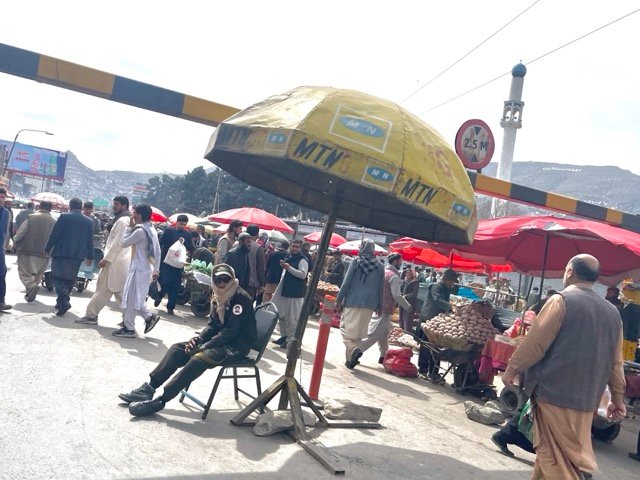
Central Kabul - Afghanistan. Photo by @AADIL for ADN
By Kazim Jafari
Pakistan’s Defence Minister Khawaja Asif’s recent remarks in parliament – acknowledging that Pakistan had “rented itself out” to the United States after 9/11 – have triggered a wave of sharp reactions from prominent Afghan political figures. Their responses, though varied in tone, converge on a shared critique: Pakistan’s political and military establishment has long played a double game in Afghanistan, and Asif’s selective confession obscures more than it reveals.
Former Afghan intelligence chief Rahmatullah Nabil delivered the most forceful rebuttal. In his view, Asif’s comments are not an honest reckoning but a revisionist attempt to sanitize decades of Pakistani policy.
Nabil highlights the contradictions in Asif’s narrative: the same politician who now frames Pakistan’s involvement in Afghanistan as a purely political miscalculation once invoked religious legitimacy when the Taliban returned to power, telling the United States, “Power is yours, God is with us.”
For Nabil, this contradiction exposes the deeper problem: Pakistan’s Afghan policy has always blended ideology, geopolitics, and opportunism. To retroactively reduce it to “political mistakes” is, in Nabil’s words, an evasion of responsibility for the human cost borne by Afghans – graveyards, displacement, and destroyed villages.
Former U.S. Ambassador to Afghanistan Zalmay Khalilzad approaches Asif’s remarks from a different angle, focusing on Pakistan’s strategic duplicity during the U.S.-led war on terror. Khalilzad notes that while Pakistan received billions in military and financial support for assisting U.S. operations, its security establishment simultaneously provided sanctuary to the Taliban insurgency fighting American forces.
Khalilzad’s central question is pointed: if Pakistan was “renting itself” to the United States, was it also collecting “rent” from another power hostile to Washington? And if not, what motivated the establishment to undermine the very war effort it was being paid to support?
Khalilzad’s intervention underscores a long-standing American frustration: Pakistan’s Afghan policy has been shaped not by alliance commitments but by its own regional calculus, often at the expense of stability in Afghanistan.
Former Afghan Member of Parliament Mariam Solaimankhil, now in the diaspora, adds yet another layer by emphasizing the lived consequences of Pakistan’s policies. For her, Asif’s remarks are not merely contradictory – they are dismissive of Afghan suffering.
Soliamankhil argues that Pakistan’s decades-long involvement in Afghanistan was not an accidental byproduct of global politics but a deliberate strategy rooted in ideological engineering, from madrassa curricula to jihadist narratives. Solaimankhil’s critique aligns with Nabil’s: Pakistan was not simply a victim of geopolitical pressures but an active architect of the very forces that destabilized Afghanistan.
Taken together, these three responses reveal a broader truth: Asif’s admission, while notable, is far from a full accounting. It acknowledges Pakistan’s transactional relationship with the United States but avoids confronting the deeper ideological and strategic choices that shaped its Afghan policy.
For Afghans, the issue is not merely that Pakistan “rented itself out,” but that it did so while simultaneously cultivating militant proxies, shaping regional narratives, and externalizing the costs onto Afghan society.
Asif’s remarks may have been intended as political candor, but for Afghan observers, they reopen long-standing wounds – and demand a more honest reckoning than Pakistan’s political establishment has yet been willing to offer.
Kazim Jafari is a political science student at the University of Heidelberg in Germany.
Note: The contents of the article are of sole responsibility of the author. Afghan Diaspora Network will not be responsible for any inaccurate or incorrect statement in the articles.