Kabul Blast Exposes Foreign Vulnerabilities as ISKP Expands Its Reach
By SS Ahmad
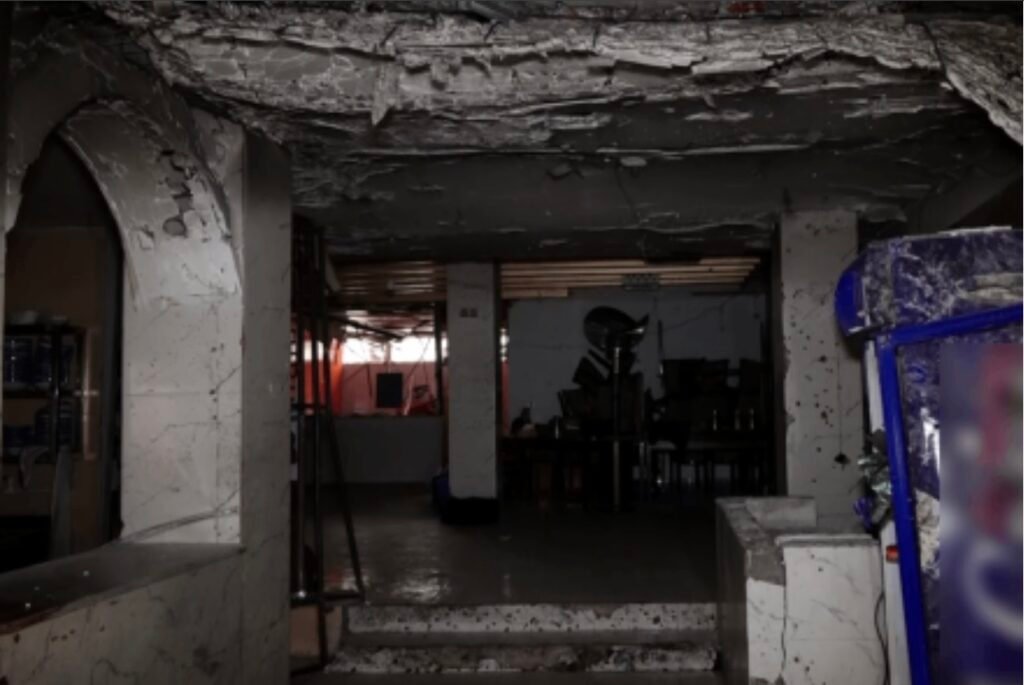
The bombing of a Chinese Muslim–owned restaurant in Kabul this week has once again exposed the fragility of Afghanistan’s security environment and the complex geopolitical tensions shaping it. What began as a modest halal restaurant, opened by Al‑Majid and his wife, Chinese Muslims seeking to build commercial ties with Afghans, has now become a symbol of the risks facing foreign nationals and local communities alike.
Eyewitnesses describe the restaurant as a place of peaceful coexistence. The owners prayed alongside Afghan neighbors, and their business served as a small bridge between Afghan consumers and Chinese Muslim traders. That bridge was shattered on Monday afternoon when an explosion ripped through the establishment, killing at least seven people, including a Chinese national named Ayub, and injuring many others.
Within hours, the Islamic State’s local affiliate, ISKP, claimed responsibility. The group framed the attack as retaliation for China’s treatment of Uyghur Muslims, a narrative consistent with ISKP’s strategy of exploiting global grievances to justify local violence. The Taliban initially stated that the cause of the blast was under investigation, but ISKP’s claim fits its pattern of targeting foreign nationals, especially those linked to countries engaging diplomatically or economically with the Taliban.
China reacted swiftly. Beijing demanded that the Taliban “spare no effort” in treating the wounded and strengthening protection for Chinese citizens and investments. The attack comes at a sensitive moment: China has cautiously expanded its presence in Afghanistan since 2021, exploring mining projects and infrastructure deals. ISKP’s targeting of Chinese nationals threatens to undermine these efforts and complicates the Taliban’s attempts to present Afghanistan as secure and open for business.
Yet the security picture is even more complex. Former Afghan intelligence chief Rahmatullah Nabil added a new layer of controversy when he claimed via a public statement on X (former Twitter) that the attack was planned across the border in Pakistan. According to Nabil, an individual named Khalid al‑Manat allegedly leads an ISKP network in the Nowshera region and operates “in coordination with Pakistan’s military intelligence services.” Nabil further asserted that more than fifty ISKP members are trained and directed from this center, and that the Kabul attack was planned there.
These allegations cannot be independently verified, but they highlight a long‑standing regional concern: the porous Afghan‑Pakistan crossing points and the use of cross-border sanctuaries by militant groups. ISKP has previously exploited these borderlands to evade counterterrorism pressure, and accusations of external facilitation, whether accurate or politically motivated, reflect the deep mistrust that continues to shape Afghan‑Pakistan relations.
For the Taliban, the attack poses both practical and reputational challenges. Their claim to have restored security is increasingly undermined by ISKP’s urban attacks. Each incident erodes investor confidence and complicates diplomatic engagement. For China, the bombing reinforces the risks of operating in Afghanistan despite its strategic interest in the region.
Ultimately, the Kabul restaurant attack is more than a tragic event. It is a reminder that Afghanistan remains a contested security arena where local grievances, regional rivalries, and global ideological battles intersect. As long as militant networks retain cross-border mobility and political divisions persist, Afghanistan’s path toward stability and its ability to host foreign partners will remain deeply uncertain.
SS Ahmad is a freelance researcher and journalist based in Kabul, Afghanistan.
Note: The contents of the article are the sole responsibility of the author. Afghan Diaspora Network will not be responsible for any inaccurate or incorrect statements in the articles.