Escalating Violence and Investor Risk in KP and Balochistan Amid Afghan Border Closure

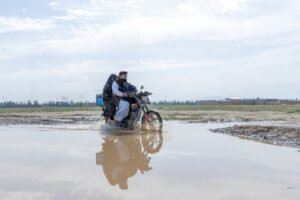
Khost Province in eastern Afghanistan, near the Durand Line. Photo: @AADIL for ADN
By Nasir Khattak
The latest CRSS data, reported by Arab News, underscores a fundamental contradiction of a tactical decline in cross-border attacks after Pakistan’s October 2025 Durand Line crossing points closure has coincided with the country’s deadliest year in a decade, with violence overwhelmingly concentrated in Khyber Pakhtunkhwa (KP) and Balochistan.[1]For investors in capital‑intensive, fixed‑asset sectors such as energy and mining, this reinforces that border management alone does not meaningfully mitigate core security risks or restore predictability in Pakistan’s frontier provinces.
Overall violence surged by nearly 34 percent year‑on‑year, with fatalities rising from 2,555 in 2024 to 3,417 in 2025, extending a five‑year upward trend that began with the Taliban’s return to power in Afghanistan in 2021.[2] Each year since 2021 has seen double‑digit increases in violence, including spikes of roughly 56 percent in 2023, nearly 67 percent in 2024, and a further 34 percent in 2025, confirming that the country is in a sustained escalation phase rather than experiencing episodic volatility. For investors, this pattern signals structural deterioration in the security environment rather than a short‑term shock that can be “managed around” through risk premia or enhanced site security.
This deterioration is geographically concentrated in precisely those provinces that anchor Pakistan’s energy and mineral potential. KP and Balochistan together accounted for more than 96 percent of all fatalities and nearly 93 percent of violent incidents nationwide in 2025. KP was the worst‑hit, with fatalities jumping 44 percent from 1,620 in 2024 to 2,331 in 2025, while Balochistan’s deaths rose from 787 to 956, an increase of nearly 22 percent over the same period.[3] KP is central to hydropower, cross‑border energy corridors and emerging critical mineral prospects, while Balochistan underpins large‑scale copper‑gold, coal, and coastal energy infrastructure. Persistent and rising violence in these geographies directly targets the very backbone of Pakistan’s long‑term resource‑based growth narrative.
The reported impact of the Afghan border closure must therefore be viewed through this broader lens. CRSS notes that after Pakistan shut the border on 11 October 2025, terrorist attacks fell by nearly 17 percent in December, following a 9 percent decline in November, with violence‑linked fatalities among civilians and security personnel dropping by around 4 percent and 19 percent respectively in those months. This is operationally significant but strategically limited. The country still recorded its most violent year in a decade, and the cumulative annual increase in fatalities dwarfs the marginal late‑year gains. For investors, short‑term percentage drops over a two‑month window do not offset a multi‑year trend of escalating attacks, nor do they address deeper drivers such as militant presence, governance deficits, and local grievances in KP and Balochistan.
Equally important, the composition of violence and the target set offer little comfort to commercial actors. Security forces remained the primary targets of militant groups in 2025, with the army and Frontier Corps suffering 374 fatalities, including 22 officers, and police recording 216 deaths. The Tehreek‑e‑Taliban Pakistan (TTP) claimed the largest share of attacks against security personnel, followed by the Balochistan Liberation Army (BLA), the Baloch Liberation Front (BLF), and Daesh’s regional affiliate. These are the same actors that have long targeted strategic infrastructure, Chinese‑linked projects, and symbols of the state, and their operational resilience despite high militant fatalities suggests an ecosystem capable of shifting from purely security‑force targets to high‑value economic assets whenever tactically advantageous.
The CRSS report further notes that 2025 was the deadliest year in a decade for militants, with outlaws accounting for more than 60 percent of all fatalities, and some 2,060 militants killed in at least 392 security operations. On paper, this indicates an intense kinetic campaign; however, for investors it also confirms a conflict environment marked by frequent operations, retaliatory attacks, and sustained contestation rather than consolidation of state control. High militant attrition without a corresponding, durable decline in overall violence implies replenishment, dispersion, or fragmentation of armed actors, dynamics that increase unpredictability for project staff movement, logistics, and site perimeters in remote districts of KP and Balochistan.
From an investment risk perspective, three implications stand out. First, the spatial concentration of violence in KP and Balochistan means that energy and mining projects face a differentiated and significantly higher risk profile than ventures in Punjab and Sindh, which together accounted for less than 3 percent of casualties in 2025 and were described as experiencing “relative containment of violence.” Second, the spread of violence into previously calmer regions, including POJK, which recorded 15 fatalities after reporting none a year earlier, highlights the potential for contagion, threatening transit routes and support hubs even outside traditional hotspots. Third, the primacy of cross‑border narratives, Pakistan’s repeated accusations that Afghanistan shelters TTP and BLA elements, and that Kabul “facilitates” attacks, risks diverting policy attention towards border management at the expense of addressing internal political, economic, and governance drivers of militancy in host communities.
In this context, the October 2025 Durand Line crossing points closure is best understood as a tactical disruption tool, not a strategic solution capable of restoring investor confidence. The reported 9–17 percent month‑on‑month decline in attacks and the late‑year fall in fatalities do not reverse the fact that violence has risen every year since 2021, nor do they alter the reality that KP and Balochistan remain the epicenters of lethal activity. For investors in energy and mining, where project lifecycles span decades and capital recovery depends on long‑term stability, such a measure is insufficient to re‑rate risk; it may modestly reduce specific cross‑border infiltration threats while leaving intact entrenched local networks and structural grievances that drive attacks on infrastructure and state‑aligned assets.
Nasir Khattak specializes in the China-Pakistan region, with a particular focus on the economic relations between the two countries.
Note: The contents of the article are the sole responsibility of the author. Afghan Diaspora Network will not be responsible for any inaccurate or incorrect statements in the articles.
[1] https://www.arabnews.pk/node/2627995/pakistan
[2] https://gulfnews.com/world/asia/pakistan/pakistan-terror-violence-falls-after-afghan-border-closure-despite-deadly-2025-report-1.500395855
[3] https://www.siasat.com/pak-witnesses-drop-in-terror-attacks-since-afghan-border-closure-3319516/