Afghan Refugees Under Siege in Pakistan

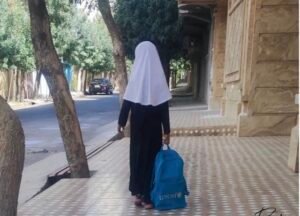
Afghan families forcibly returned from Pakistan on the Afghan side of the Durand Line. Photo: @Afghan for ADN
By Shinwari
Forced returns push families into uncertainty, with women and children bearing the brunt of the humanitarian fallout.
Pakistan has intensified its crackdown on Afghan refugees, particularly in Khyber Pakhtunkhwa (KP), de-notifying camps and accelerating deportations. Even holders of Proof of Registration (PoR) cards- legally recognized residents – face pressure to leave.
Officials justify these measures as enforcing immigration laws, but rights groups warn they violate basic protections and exacerbate humanitarian suffering. According to theInternational Organization for Migration (IOM), nearly one million Afghans have returned from Pakistan since April 2025, many under fear rather than voluntary choice.
At the Torkham crossing point, families who fled conflict decades ago now confront renewed uncertainty. One returnee told Pakistani Dawn Newspaper:
“Everything we built in Pakistan is gone. We are starting from nothing.”
Women are disproportionately affected. The Afghan Diaspora Network reports that women face extreme hardship during deportations. One explained bluntly: “I am only surviving.”
Families struggle to secure shelter, protect children, and access basic services. Children miss school, while adults confront unemployment and lack of documentation.
Critics argue that Pakistan is not merely enforcing law but exploiting Afghan refugees for political and economic leverage.
“Refugees are being instrumentalized to gain leverage over the Taliban government and international donors,” said a Peshawar-based analyst. Forced returns serve domestic political goals while leaving displaced populations vulnerable.
Rights groups also condemn Pakistan for treating long-term residents as illegal migrants, ignoring decades of residence and social ties.
“The current approach undermines trust and exposes refugees to unnecessary hardship,” a UN official said. Forced returns without safeguards violate international norms and endanger vulnerable populations.
The crackdown highlights limited coordination with humanitarian agencies. Refugees report restricted access to food, medical care, and shelter. Vulnerable groups – women, children, and the elderly – face the highest risk of exploitation and neglect.
The measures may also destabilize regional security. Afghan families returning under duress enter a country facing economic hardship, political uncertainty, and severe restrictions on women’s rights. Lack of structured support amplifies social and economic pressures, leaving many in limbo.
Despite these challenges, refugees rely on informal networks of family and friends to survive. Yet these networks cannot replace legal protections or institutional aid.
The situation remains fluid, with further deportations reportedly planned in urban centers. International observers urge Pakistan to halt forced returns, end exploitation, and ensure humanitarian protections. Without immediate intervention, Afghan refugees will continue to face escalating threats to safety, dignity, and survival.
Author chooses a single pseudonym. Shinwari is a freelance journalist based in Peshawar, Pakistan.
Note: The contents of the article are of sole responsibility of the author. Afghan Diaspora Network will not be responsible for any inaccurate or incorrect statement in the articles.