Reza Pahlavi’s Address to Iranian Armed Forces Sparks Tension with Afghan Diaspora
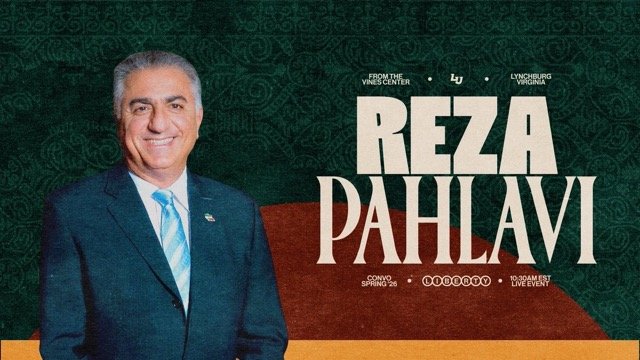
Photo:@Reza Pahlavi X account
By Kazim Jafari
A recent video message by Iran’s exiled crown prince Reza Pahlavi has ignited a storm of reactions across Iranian and Afghan social media. In the message, Pahlavi called on the Iranian armed forces to confront what he described as foreign‑backed militias operating inside Iran. While listing groups such as Hashd al‑Shaabi and Hezbollah, he also referred to “Afghan and Pakistani terrorists.” For many Afghans, especially those living in Iran or in the diaspora, this phrasing was interpreted as a sweeping generalization that unfairly associated Afghan nationals with terrorism. The reaction was swift and emotional.
Afghan filmmaker Sahraa Karimi was among the first to respond. Sharing the video on X, she condemned Pahlavi’s wording and accused him of shifting responsibility for Iran’s internal crises onto vulnerable refugee communities. Her message resonated widely, reflecting a broader frustration among Afghans who feel they are repeatedly scapegoated during moments of political tension in Iran.
Afghan writer and poet Homeira Qaderi also issued a blistering response, accusing Pahlavi of betrayal and moral hypocrisy. She argued that he was deflecting blame for Iran’s political turmoil onto Afghans rather than confronting the failures of Iran’s own political class. Her comments struck a chord with many who see the Afghan refugee community as caught in the crossfire of regional politics.
Afghan journalist Waheed Baktash, based in Munich, added another layer to the criticism. He argued that Pahlavi avoided naming Iraq when discussing Hashd al‑Shaabi, yet explicitly mentioned Afghanistan and Pakistan, pairing them with the word “terrorist.”
Baktash emphasized that, according to his reporting, no Afghan civilians in Iran are engaged in combat roles inside the country. His commentary framed Pahlavi’s remarks as part of a broader pattern in which Afghan refugees in Iran are blamed for issues far beyond their control.
For many Afghans, the fear is that political rhetoric can translate into discrimination, harassment, or policy shifts that directly affect their lives.
Some analysts, however, offered a different interpretation. They argued that Pahlavi’s remarks were likely directed not at Afghan or Pakistani civilians but at specific armed groups aligned with the Islamic Republic of Iran – particularly the Fatemiyoun and Zainabiyoun Brigades.
The Fatemiyoun Brigade, composed largely of Afghan Shiite fighters, has been active in Syria under the guidance of Iran’s Islamic Revolutionary Guard Corps (IRGC). Many of its members were recruited from Afghan refugee communities in Iran, often under economic or legal pressure.
The Zainabiyoun Brigade, meanwhile, is a Pakistani Shiite militia with a similar structure. According to reporting by the Jamestown Foundation, the group emerged around 2013–2014 as part of Iran’s broader regional strategy. Its fighters, drawn from Pakistan’s Shiite minority communities, were deployed to Syria to support the Assad government.
Analysts note that Iran used both brigades to project influence while minimizing direct Iranian casualties. Recruitment often relied on a mix of ideological messaging, financial incentives, and promises of support for families.
Supporters of this interpretation argue that Pahlavi’s reference to “Afghan and Pakistani terrorists” was shorthand for these militias. Critics counter that political figures – especially those speaking to a mass audience – must choose their words carefully.
In a region where national identity and refugee status are deeply sensitive issues, imprecise language can have real‑world consequences. For Afghans, who form one of the world’s largest refugee populations in Iran, the stakes are particularly high.
The controversy surrounding Pahlavi’s remarks reveals how fragile and emotionally charged the intersection of identity, migration, and political rhetoric has become. It also highlights the challenges faced by political figures in exile, whose messages are interpreted not only by their intended domestic audience but also by regional communities with their own histories and sensitivities.
Whether Pahlavi intended to target militias or refugees, the fallout shows how powerful – and potentially damaging – political language can be when it touches on identity, security, and migration.
For the Afghan diaspora, the episode served as a reminder of how quickly narratives can shift and how important it is to challenge generalizations that risk harming vulnerable communities.
Kazim Jafari is a political science student at the University of Heidelberg in Germany.
Note: The contents of the article are the sole responsibility of the author. Afghan Diaspora Network will not be responsible for any incorrect statements in the articles.