Deadly Airstrikes Deepen Tensions Between Pakistan and Afghanistan
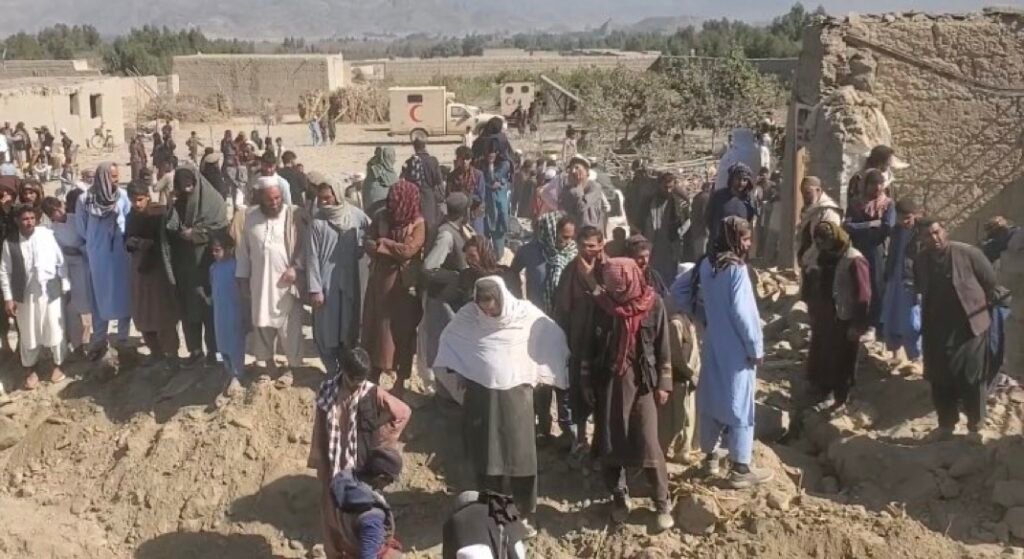
During a burial ceremony in Behsud district of Nangarhar province after Pakistani airstrikes that killed multiple civilians. Photo: Afghan social media
By Kazim Jafari
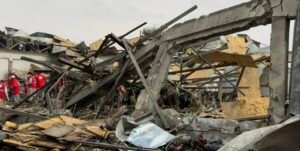
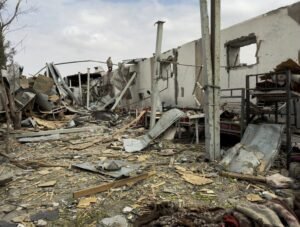
Pakistan’s airstrikes in Afghanistan’s Nangarhar and Paktika provinces during Ramadan have sharply escalated tensions between the two countries, with Afghan officials, former leaders, and diaspora figures condemning the attacks as a violation of sovereignty and a dangerous provocation. While Pakistan insists the strikes targeted Tahre-e Taliban Pakistan (TTP) and Islamic State Khorasan Province (ISKP) hideouts, Afghan authorities say the bombings killed civilians, including women and children, and struck a religious school.
The Ministry of Defense of the Taliban said the attacks “killed and wounded dozens of innocent women and children” and described them as a breach of Afghanistan’s sovereignty and international norms. Ministry spokesperson Enayatullah Khwarazmi warned that Afghanistan would deliver a “measured and appropriate response” at a time of its choosing.
Local officials in Nangarhar’s Behsud district reported that a family home in the Gardi Kach area was hit, killing seventeen members of the same family. Additional strikes were reported in Khogyani and Ghani Khel, while in Paktika’s Barmal and Urgun districts, air raids caused damage but no confirmed casualties. Afghan authorities maintain that all victims in Nangarhar were civilians.
The attacks have triggered widespread public anger. Residents across multiple provinces described the bombings as an assault on national sovereignty and an affront to the sanctity of Ramadan. Many called for a firm response if diplomatic channels fail.
Former Afghan leaders issued strong statements. Former President Hamid Karzai, in a message on X, condemned the airstrikes “in the strongest terms,” calling them a clear violation of Afghanistan’s sovereignty. He expressed condolences to the families of the victims and urged Pakistan to “reconsider its policies toward Afghanistan and adopt the path of good and civilized neighborly relations.”
Dr. Abdullah Abdullah, former head of the High Council for National Reconciliation, also issued a statement, saying the attacks were deeply concerning and “against Afghanistan’s national sovereignty and territorial integrity.” He warned that such actions fuel instability and insisted that “bombardment, targeting civilians, and violence are not solutions,” emphasizing that dialogue is the only viable path for resolving disputes.
Afghans in the diaspora echoed these concerns. Journalist Bilal Sarwary, writing from Canada, noted that the strikes occurred during Ramadan, comparing the timing to military actions in Lebanon and Syria that historically inflamed public anger. He argued that air power has rarely produced sustainable political outcomes and warned that the current trajectory points toward a prolonged confrontation between Kabul and Islamabad. Sarwary highlighted reports that multiple districts in Nangarhar were hit and that an entire family was killed in Behsud, raising serious concerns about civilian protection and regional stability.
Former deputy defense minister Tamim Asey offered a sharp critique, arguing that the strikes – based on what he described as questionable intelligence – would neither deliver tactical gains nor alter the strategic landscape. Instead, he warned they risk fueling further insurgency in Pakistan’s own border regions and strengthening groups such as the TTP. Asey said the escalation reflects a strategic miscalculation by Pakistan’s military leadership and accused Islamabad of externalizing its domestic security failures.
Pakistan, however, maintains that the airstrikes were a necessary response to a series of recent suicide attacks in Islamabad, Bajaur, and Bannu. In a statement, the Ministry of Information said Pakistan had “conclusive evidence” that these attacks were directed by Afghanistan‑based leadership and that the strikes were precise, intelligence‑based operations against seven militant camps. The ministry reiterated that the Taliban government must uphold its commitments under the Doha Agreement and prevent armed groups from using Afghan territory.
The airstrikes now threaten to unravel a fragile ceasefire negotiated after deadly border clashes last year. With diplomatic trust at historic lows and both sides trading accusations, the risk of further escalation is growing. For Afghanistan, the civilian toll and violation of its airspace have become a rallying point, hardening public sentiment and political resolve. Whether dialogue can still prevent a deeper rupture remains uncertain, but the events of Ramadan have brought the two countries to a dangerous crossroads.
Kazim Jafari is a political science student at the University of Heidelberg in Germany.
Note: The contents of the article are the sole responsibility of the author. Afghan Diaspora Network will not be responsible for any inaccurate statements in the articles.