Afghan Diaspora Condemns Pakistan’s Airstrikes and Warns of a Deepening Regional Crisis
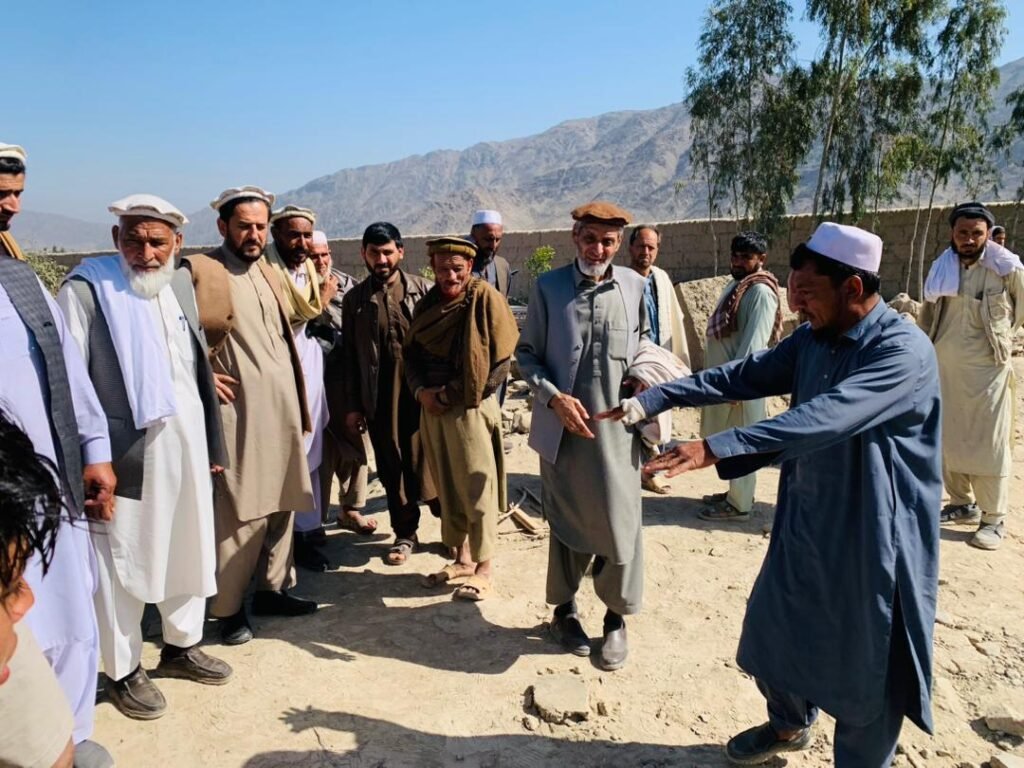
A survivor of the Pakistani airstrike (right, wearing a white cap and with a bandaged hand) describes how the bombing killed most of his family, including women and children. Photo: @ATTOCK
By Kazim Jafari
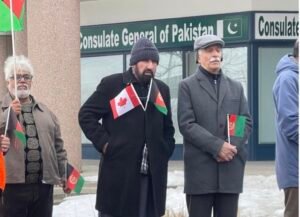
The Pakistani airstrikes that struck Afghanistan’s Nangarhar and Paktika provinces on Sunday – during the month of Ramadan – have triggered an extraordinary wave of outrage across the Afghan diaspora. From former diplomats and political leaders to journalists, activists, and civil society figures, Afghans abroad have responded with a unified voice: the attacks represent a grave violation of Afghan sovereignty, a humanitarian tragedy, and a dangerous escalation that threatens regional stability.
For many in the diaspora, the civilian toll reported by Afghan officials – women, children, and elderly among the dead – has become the emotional and moral center of their reaction. The strikes, which Pakistan claims targeted TTP and ISKP hideouts, are viewed by Afghan diaspora as part of a long‑standing pattern of cross‑border aggression that has repeatedly harmed civilians while failing to address the underlying drivers of militancy.
Among the most prominent voices was Zalmay Khalilzad, former U.S. ambassador to Afghanistan and Iraq. Writing on X (former Twitter), he condemned what he called “horrendous Pakistani air attacks,” noting that “many innocent women, children and elderly have been killed and wounded.” Khalilzad argued that Pakistan’s actions are rooted in decades of internal dysfunction – “years of bad decisions, ‘clever’ maneuvers gone wrong, and poor governance,” including the oppression of minorities, manipulation of elections, and repeated military takeovers. These failures, he said, have become a tragedy not only for Pakistan’s own people but also for its neighbors, especially Afghans who “finally ended their own conflict only to now experience the spillover from next door.” He urged Pakistan’s establishment to change course.
From Canada, journalist Bilal Sarwary offered a broader geopolitical reading. He noted that the timing of the strikes during Ramadan evokes the same public anger seen during military operations in Lebanon and Syria, where attacks during sacred periods have historically deepened resentment. Sarwary argued that air power has rarely produced sustainable political outcomes, citing conflicts from Vietnam to Gaza. He warned that the current trajectory suggests a prolonged and potentially entrenched confrontation between Kabul and Islamabad, with trade routes strained, people‑to‑people ties at historic lows, and diplomatic trust severely eroded.
Other diaspora figures focused on the internal vulnerabilities that make Afghanistan susceptible to such attacks. Afghan political activist Fawzia Koofi said harming innocent civilians “from any side” is unjustifiable. But she added that only a government with national legitimacy – one rooted in the will of the people and respectful of the rights of all citizens – can truly protect Afghanistan’s territorial integrity. She warned that Afghanistan must not become a safe haven for proxy groups and argued that legitimacy, inclusion, and constitutional governance are essential for safeguarding peace both inside the country and across the region.
Former deputy defense minister Tamim Asey expanded this argument into a structural critique of Afghanistan’s political order. In a detailed statement, he said the Taliban, as the dominant political force, bear the greatest responsibility for transforming Afghanistan into a shared and safe home for all citizens. He called for reopening schools, universities, research centers, and defense industries to men and women alike, arguing that no society can achieve stability or independence without mobilizing all of its human capital.
Asey warned that without real deterrence – military, economic, and informational – Afghanistan will continue to face such attacks. “How long will Afghanistan remain a victim of misguided policies and medieval thinking?” he asked. “How long will other countries, especially Pakistan, bomb our soil under various pretexts?” He argued that only national unity and institutional reform can prevent Afghanistan from being repeatedly targeted and humiliated.
Former Afghan ambassador to Germany Hamid Sediq echoed these concerns, saying he was “deeply troubled” by reports of civilian casualties and warning that violence only deepens suffering and undermines regional stability. He urged Pakistan to uphold international law and emphasized that peace and dialogue must prevail.
Former Member of Parliament of Afghanistan, Golalai Safi, offered one of the bluntest assessments, describing Pakistan as a destabilizing actor in the region and criticizing those who believe continued attacks might somehow shift political power in Afghanistan. She argued that Pakistan’s actions are part of a long‑standing strategy to keep the region unstable.
Across continents, the Afghan diaspora’s message is strikingly consistent: the airstrikes are not an isolated incident but a symptom of deeper regional dysfunction and Afghanistan’s unresolved political fragmentation. Their reactions reflect a shared fear that without structural change, national unity, and genuine diplomacy, Afghanistan will remain vulnerable to external aggression – and civilians will continue to pay the highest price.
Kazim Jafari is a political science student at the University of Heidelberg in Germany.
Note: The contents of the article are of sole responsibility of the author. Afghan Diaspora Network will not be responsible for any inaccurate or incorrect statement in the articles.