Afghanistan in the Global Peace Index 2025: A Fragile State in a Fragmenting Region
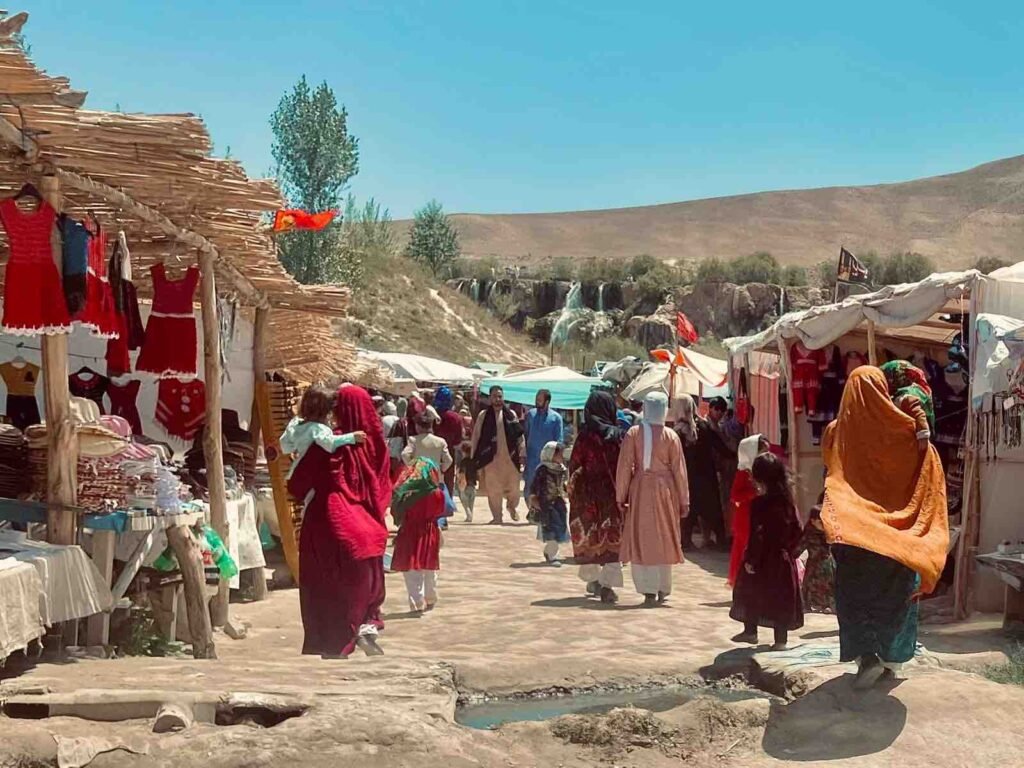
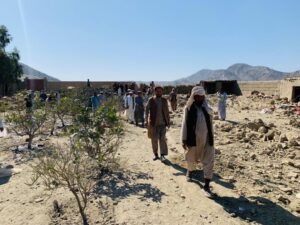
A local market in Central Bamiyan province in Afghanistan. Photo: @AADIL for ADN
ADN
The Global Peace Index (GPI) 2025 places Afghanistan near the bottom of the global rankings at 158 out of 163 countries, underscoring the country’s persistent fragility at a time when global peacefulness is deteriorating at its fastest pace in nearly two decades. With 59 active state‑based conflicts worldwide and rising geopolitical fragmentation, Afghanistan’s challenges cannot be understood in isolation. The international environment surrounding the country is becoming more volatile, and the mechanisms for resolving conflict are weakening.
The GPI highlights that global peacefulness declined by 0.36% in 2025, marking the 13th deterioration in 17 years. Many of the structural drivers that precede major conflict – economic fragmentation, deteriorating relations between neighboring states, and the internationalization of local conflicts – are now at their highest levels since WWII. For Afghanistan, these global pressures intersect with entrenched domestic vulnerabilities: weak institutions, limited economic resilience, and ongoing insecurity.
Regionally, Afghanistan sits in South Asia, the second least peaceful region globally, which experienced the largest regional decline in 2025. Much of this deterioration is driven by Pakistan, ranked 144, where internal conflict indicators have sharply worsened. Pakistan’s decline is not abstract; it is driven by identifiable and escalating security pressures. Balochistan, the country’s largest but least governed province, has seen a surge in attacks targeting security forces, infrastructure, and Chinese‑backed development projects. The intensification of the Baloch insurgency – fueled by governance gaps, economic marginalization, and the strategic vulnerabilities of the China–Pakistan Economic Corridor (CPEC) – has pushed Pakistan’s conflict indicators downward.
Simultaneously, the Tehrik‑i‑Taliban Pakistan (TTP) has expanded its operational reach, carrying out more frequent and lethal attacks across Khyber Pakhtunkhwa and beyond. The TTP’s resurgence, enabled by cross‑border sanctuaries and fragmented counterterrorism coordination, has strained Pakistan’s internal security apparatus. Its ability to strike both civilian and military targets has driven up deaths from internal conflict and heightened perceptions of insecurity. Together, the intensification of the Baloch insurgency and the TTP’s renewed momentum illustrate why Pakistan’s peace ranking has deteriorated so sharply – and why Afghanistan’s security environment remains deeply affected by developments across the Durand Line.
To the west, Iran, ranked 142, faces its own pressures. Economic strain, domestic polarization, and involvement in regional conflicts place Iran squarely within the GPI’s broader narrative of declining Positive Peace. For Afghanistan, Iran is a critical economic and humanitarian corridor. Instability in Iran affects Afghan refugees, cross‑border trade, energy access, and the flow of essential goods. As global integration declines and restrictive trade practices rise, Afghanistan’s dependence on its neighbors becomes even more precarious.
The GPI also emphasizes the erosion of Positive Peace – the attitudes, institutions, and structures that sustain peaceful societies. After a decade of improvement, Positive Peace has been declining since 2019. For Afghanistan, where governance capacity is limited and social cohesion remains fragile, this global decline is particularly consequential.
Taken together, the GPI 2025 paints a stark picture: Afghanistan is not only grappling with its own internal challenges but is also surrounded by neighbors whose peace trajectories are deteriorating. With Pakistan and Iran both ranked in the bottom 25 globally, Afghanistan sits at the center of a region where conflict drivers are intensifying and the mechanisms for resolving them are weakening. In this environment, Afghanistan’s path toward stability remains narrow, shaped as much by regional dynamics as by its own internal conditions.