Pakistan’s 27th Amendment: When the Constitution Kneels Before the Barracks
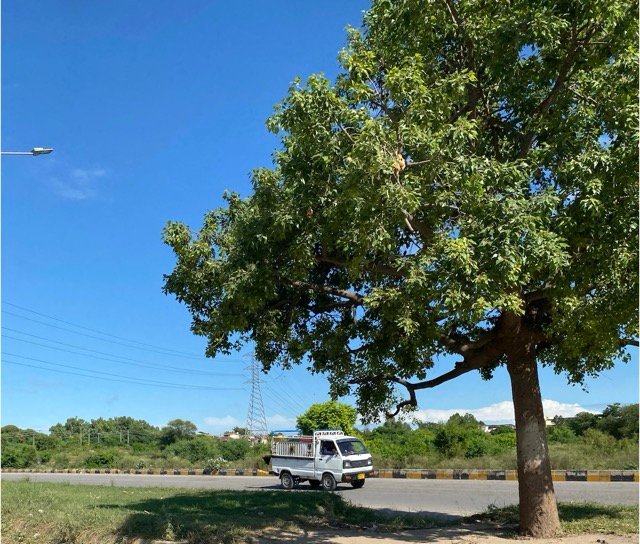
Outskirts of Pakistan's Islamabad. Photo: @private
By A. Shafaq
From across the Durand Line, we Afghans have long watched Pakistan’s uneasy dance between democracy and dictatorship – a choreography of brief civilian interludes interrupted by the boots of men who claim to save the nation from itself. But today, that dance has reached a darker rhythm. The proposed 27th Amendment to Pakistan’s Constitution is not another episode of military intervention; it is an attempt to give that intervention constitutional legitimacy.
The draft bill now circulating in Islamabad seeks to amend Article 243 and several connected provisions to create the post of Chief of Defense Forces, effectively making the Chief of Army Staff the supreme commander over all services. It grants him lifetime privileges, immunity from prosecution, and protection from removal. It also envisages the creation of a Federal Constitutional Court, nominally to “harmonize” disputes between the judiciary and executive, but in practice likely to serve as a buffer shielding the military from judicial oversight. Provincial autonomy – already weakened — would shrink further under tighter federal control.
In essence, the 27th Amendment would constitutionalize Pakistan’s “deep state”, transforming what was once an informal power structure into a formal institution.
A Republic Rewritten in Uniform
Pakistan has lived for decades under the shadow of its generals, who have ruled directly for almost half its existence and indirectly for the rest. But this move is more profound — it seeks to fuse the state and the barracks into one entity. No longer will the military merely influence civilian life from behind the curtain; the curtain itself is being rewritten to include them as protagonists.
The logic offered by its defenders is familiar: Pakistan faces extraordinary security threats; only a “strong central command” can preserve stability. But that argument confuses strength with permanence and security with submission. The history of our region shows that when the military becomes both protector and policymaker, the result is not order but paralysis.
Pakistan’s own story confirms this. Every time its military has claimed to “rescue” democracy — from Ayub Khan in the 1950s to Zia in the 1970s to Musharraf in the 1990s – it has left the country more divided, more radicalized, and more fragile. What this amendment proposes is to make that cycle irreversible.
What makes the 27th Amendment especially dangerous is that it uses the language of law to undermine legality itself. By enshrining lifelong privileges for the top general, it transforms accountability into sacrilege.
One proposed clause explicitly states that no criminal proceedings may be initiated against the Field Marshal during his lifetime for any act committed in his capacity as Chief of Defense Forces. Another protects his rank and uniform for life.
Such wording might sound technical, but it changes the moral foundation of the republic. A constitution is meant to bind power; this amendment blesses it. It takes the unwritten privileges of Pakistan’s most powerful institution and grants them divine permanence.
If passed, this would make the army chief not only politically unchallengeable but legally untouchable – a figure above the courts, above parliament, and above the citizen.
From Kabul, the view is painfully familiar. Afghanistan, too, once allowed its security institutions to grow beyond the reach of civilian scrutiny, believing that national emergencies required exceptional authority. We learned the hard way that when institutions meant to defend the nation start defining it, democracy becomes ornamental.
The militarization of Pakistan’s constitution is not just an internal affair; it has deep implications for Afghanistan and the region. A Pakistan whose army enjoys constitutional impunity will not become a more restrained neighbor.
A. Shafaq (pseudonym) is a researcher and lecturer at one of the private universities in Kabul.
Note: The contents of the article are of sole responsibility of the author. Afghan Diaspora Network will not be responsible for any inaccurate or incorrect statement in the articles.