Pakistan’s Strikes Expose Fragile Afghanistan Truce
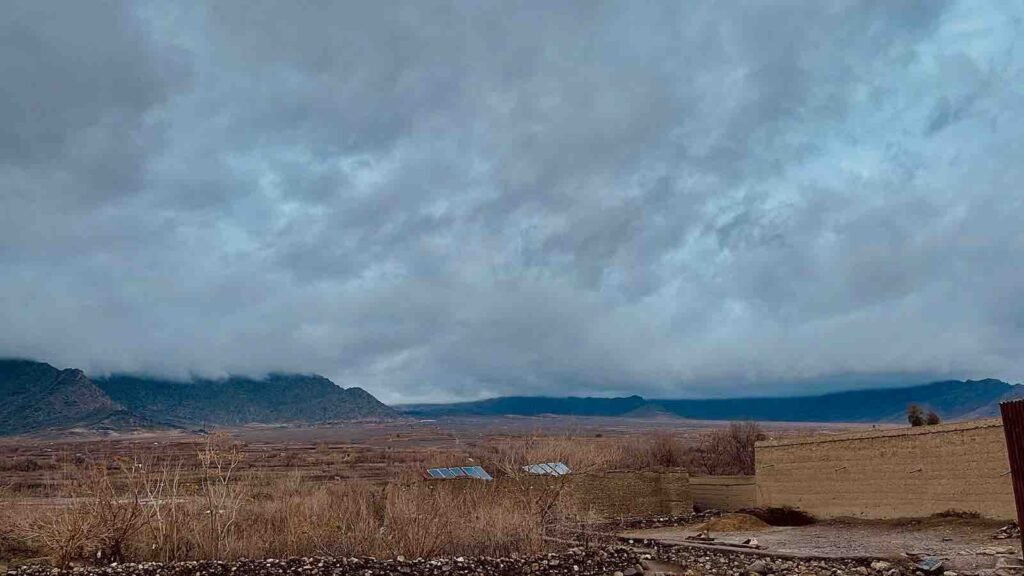
Khost province along the Durand Line on the side of Afghanistan
By SS Ahmad
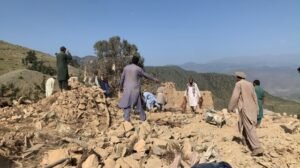
Civilians were the first to suffer when Pakistan launched late‑April strikes across the Durand Line, hitting homes, public facilities, and parts of Kunar University in one of the most serious escalations since the March ceasefire.
Afghan officials say the attacks struck residential areas, a fuel station, a drug rehabilitation center, and a student hostel on the university campus. At least four civilians were killed and more than 70 injured, including women, children, and students.
The Taliban condemned the attack as “unforgivable war crimes,” accusing Pakistan of deliberately targeting civilian sites. Pakistan denied the allegations, insisting its forces did not strike the university and were responding to militant threats along the Durand Line.
The exchange followed a shooting near Spin Boldak in which a child was killed—an incident both sides blamed on each other. The timing and scale of Pakistan’s response have raised concerns that the ceasefire negotiated in March through Chinese, Turkish, Qatari, Emirati, and Saudi mediation is now under serious strain.
Al Jazeera’s reporting notes that the truce was already fragile. The latest escalation has intensified doubts about whether either side can enforce commitments on the ground.
Human Cost of Escalation
The renewed violence reflects deeper structural tensions. Since 2021, Pakistan has accused the Taliban of allowing the Tehreek‑e‑Taliban Pakistan (TTP) to operate from Afghan territory. Kabul rejects the claim and accuses Pakistan of violating Afghan sovereignty through repeated strikes across the Durand Line.
Pakistan frames its actions as counterterrorism, while Afghan officials see them as political pressure. Bloomberg reports that Pakistan’s internal instability and rising militancy have increased the likelihood of forceful responses along the line.
The humanitarian impact is severe. More than 100,000 people have been displaced in eastern Afghanistan since February. Schools, clinics, and water systems have been damaged or closed. Nineteen health facilities in Kunar and Nangarhar are now partially or fully non‑functional. Over 13,000 students face disruptions after educational institutions were hit or evacuated.
Regional actors who helped broker the March truce are watching closely. China, in particular, has invested diplomatic capital in stabilizing the security along the Durand Line. Analysts warn that continued hostilities could undermine regional connectivity projects and complicate counterterrorism cooperation.
For Afghanistan, the strikes deepen its isolation. For Pakistan, they reflect growing frustration with cross‑line militancy. For civilians, they represent yet another cycle of violence in a conflict that has outlasted governments, alliances, and political eras.
As accusations continue on both sides, the ceasefire appears increasingly fragile. Without a credible mechanism to manage incidents and militant activity on both sides of the Durand Line, analysts warn that the region may be heading toward a prolonged period of instability—one in which civilians continue to bear the heaviest burden.
SS Ahmad is a freelance researcher and journalist based in, Kabul Afghanistan.
Note: The contents of the article are of sole responsibility of the author. Afghan Diaspora Network will not be responsible for any inaccurate or incorrect statement in the articles.