Pakistan’s Escalating Airstrikes Deepen Crisis as Afghan Civilians Bear the Brunt
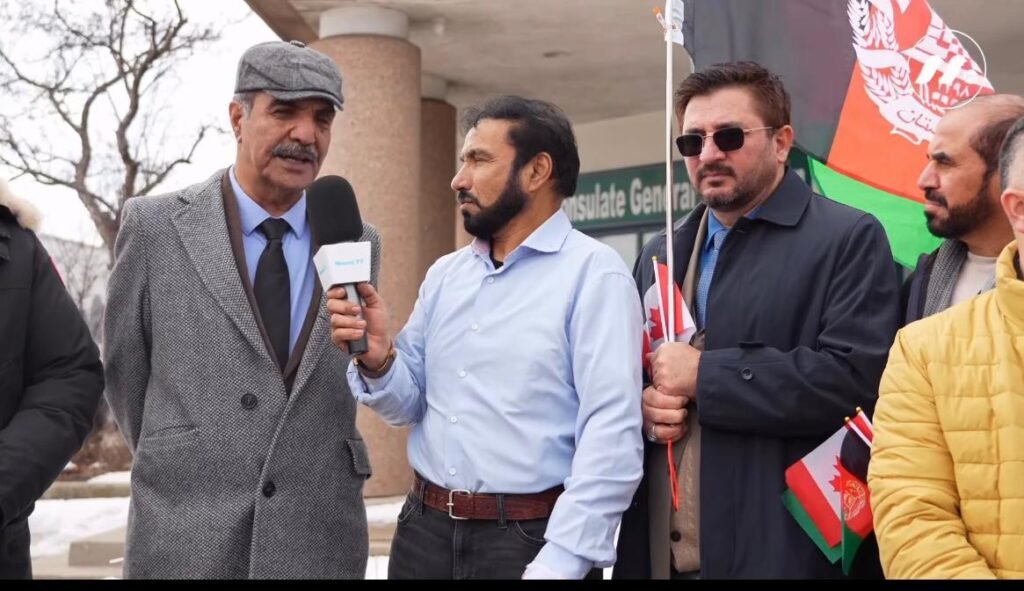
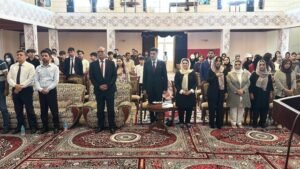
A group of Afghan diaspora members demonstrated on 3 March in front of the Pakistani Consulate in Toronto, Canada, to condemn Pakistan’s airstrikes on Afghanistan. Photo: @AWSC
By SS Ahmad
Tensions between Afghanistan and Pakistan have entered a dangerous new phase, with Pakistan carrying out a series of airstrikes across Afghanistan that the Taliban officials say have killed civilians, destroyed homes, and targeted infrastructure used by humanitarian and civilian aviation. The confrontation, now stretching into its third week, has become one of the most serious episodes of violence between the two countries in recent years — and Afghan civilians are paying the highest price.
Taliban government spokesperson Zabihullah Mujahid said Pakistani aircraft struck multiple provinces overnight, including Kabul, Kandahar, Paktia, Paktika, and Nangarhar. According to his statement, several homes were hit, leaving women and children among the dead. He described the attacks as a continuation of Pakistan’s “past aggressions,” noting that the timing — during the final days of Ramadan — underscores a disregard for humanitarian and moral norms.
One of the most significant strikes targeted fuel depots belonging to Afghan airline – Kam Air – near Kandahar Airport. These facilities supply fuel not only to Afghan civilian airlines but also to United Nations aircraft operating in the country. Taliban officials say this is the second time Pakistan has hit fuel infrastructure, after a previous strike destroyed a depot owned by a private Afghan businessman. The Taliban government condemned the attacks as “clear aggression” and vowed that they “will not go unanswered.”
Pakistan’s state‑run broadcaster confirmed that its military carried out what it called “successful airstrikes” inside Afghanistan, claiming it hit four militant hideouts and support networks. Islamabad maintains that its operations are aimed at Tehrik‑e‑Taliban Pakistan (TTP), which it accuses Kabul of sheltering. Afghan authorities reject the allegation, saying Pakistan’s strikes overwhelmingly hit civilian areas.
Local accounts from Kabul paint a devastating picture. In the Pul‑e‑Charkhi district, the eastern part of Kabul, a family of four was killed when their home was flattened in a midnight strike. More than a dozen houses in the same village were destroyed, and dozens of residents were injured. A nearby workshop was also hit, destroying shops and vehicles and injuring several mechanics. Witnesses described scenes of fire, smoke, and chaos as families scrambled to rescue survivors.
In Nangarhar, provincial officials reported that a Pakistani mortar shell killed a woman and a child. The total number of casualties across the country remains unclear, as reports continue to emerge from remote areas.
Taliban’s Ministry of Defense said its air force responded by striking Pakistani military installations in Kohat, Khyber Pakhtunkhwa. Afghan officials claim they hit a fortress, command posts, and supply depots, causing significant losses. Pakistan rejected these claims, saying its forces intercepted three crude drones launched by militants and that falling debris injured two civilians.
The escalation began in late February, when both sides started targeting each other’s military sites. Pakistan’s defense minister has described the situation as “open war,” a stark shift in rhetoric between the two governments that once cooperated closely. Both sides have claimed to inflict heavy losses, though independent verification remains limited.
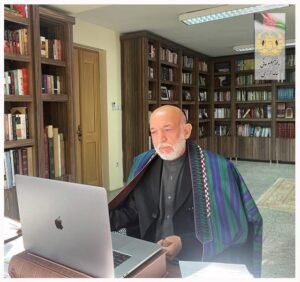
Former Afghan President Hamid Karzai condemned Pakistan’s actions as a violation of international law and neighborly obligations. Abdul Salam Zaeef, a former Taliban ambassador to Islamabad, called the strikes “a crime and a cowardly act,” saying civilians were deliberately harmed. The United Nations Assistance Mission in Afghanistan (UNAMA) expressed concern that women and children continue to suffer the most from the escalating violence.
The timing of the confrontation has raised additional concerns. The region is already unsettled by the ongoing US–Israel war against Iran, which has dominated global media coverage and overshadowed developments in Afghanistan. Analysts say this broader conflict has created a geopolitical fog in which Pakistan’s actions face limited scrutiny, leaving Afghan civilians with little international attention or support.
China has attempted to mediate. Its special envoy, Yue Xiaoyong, met Pakistani officials in Islamabad after visiting Kabul, discussing the threat of militant groups and the need for regional stability. But repeated calls for restraint from the international community have so far had little effect.
For the Afghan diaspora, the latest escalation is a painful reminder of the fragility of regional stability and the vulnerability of civilians caught between competing state interests. As Pakistan and Afghanistan continue to trade strikes, the fear is that the confrontation could widen further — with devastating consequences for families already living through decades of conflict.
SS Ahmad is a freelance researcher and journalist based in Kabul, Afghanistan.
Note: The contents of the article are the sole responsibility of the author. Afghan Diaspora Network will not be responsible for any incorrect statements in the articles.