Power Struggle and Political Rifts in Khyber Pakhtunkhwa
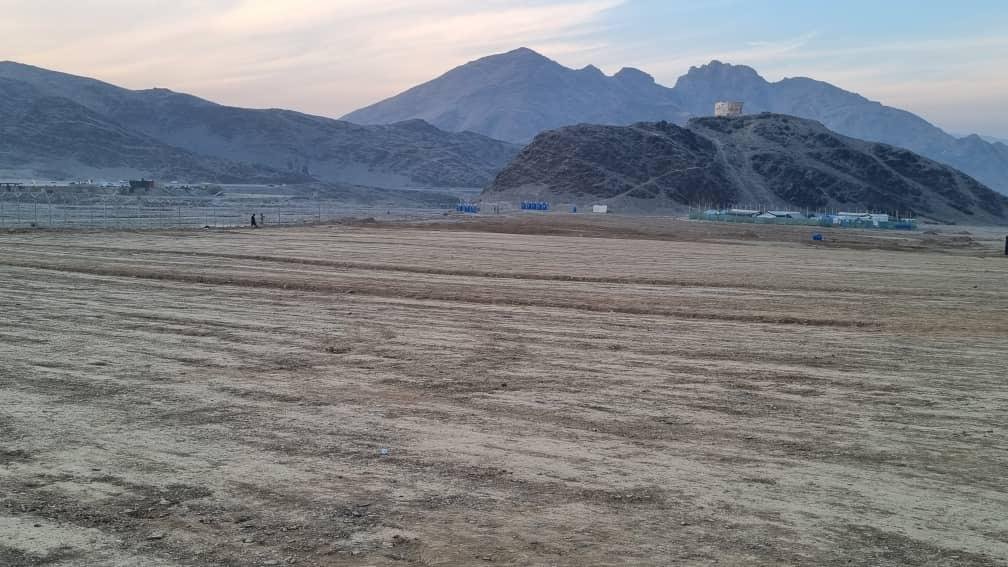
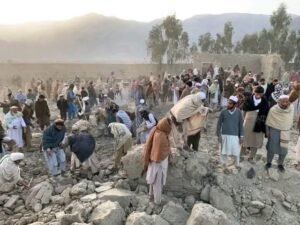
Along the Durand Line. Photo: @Afghan for ADN
By Shinwari
Khyber Pakhtunkhwa faces a deepening political confrontation between Chief Minister Muhammad Sohail Afridi and Governor Faisal Karim Kundi, escalating the province’s escalating terrorism threat. Afridi’s recent provincial tour focused on reviewing the Safe Cities project, yet Kundi accused him of inciting violence through protests while neglecting core security duties.
Federal Information Minister Attaullah Tarar amplified the criticism, slamming Afridi for questioning terrorist use of Afghan soil, revealing stark federal-provincial divides amid rising attacks.[1]
Afridi chaired high-level meetings across Peshawar, Dera Ismail Khan, Bannu, and Lakki Marwat to push the Safe Cities initiative forward. Officials reported installing cameras at key locations, 711 in Peshawar alone, alongside 88 in DI Khan, 76 in Bannu, and 47 in Lakki Marwat, with completion targeted for January 31, 2026.
The chief minister directed phased expansion to the remaining divisional headquarters and merged districts like Karak, Tank, and North Waziristan, emphasizing integration of private CCTV networks and solar-powered systems for reliability in remote areas. This project aims to bolster surveillance, crime prevention, and police capacity through integrated command centers, positioning it as a cornerstone for provincial stability.[2]
Governor Kundi, however, portrays these efforts as distractions from dangers. In a press conference, he lambasted Afridi for abandoning the province to lead political protests elsewhere, labeling the law-and-order collapse as deteriorating. Kundi highlighted daily targeting of police, soldiers, and officials, citing specifics like seven officers killed in a Tank IED attack on a police vehicle and surges in DI Khan and Bannu. He demanded the provincial government back military operations back, enhance police and Counter-Terrorism Department (CTD) capabilities, and train merged Levies forces, while questioning drone-delivered explosives’ origins, implying Afghan links without mincing words.
Kundi urged unity with federal institutions over partisan games, warning that Talibanization gains ground when leaders prioritize rallies over borders.[3] Federal intervention shows the rift’s national stakes.
Tarar condemned Afridi’s remarks on Afghan soil as supporting the terrorist narrative, calling him out for downplaying threats from groups like Tehreek-i-Taliban Pakistan (TTP), dubbed “Fitna-al-Khawarij.” The minister vowed no tolerance for extremism, citing foreign funding and non-kinetic measures like the Paigham-e-Amman Committee to counter propaganda.
Kundi echoed calls for federal-provincial collaboration to stabilize KP, criticizing PTI’s decade-long governance failures in health, education, and infrastructure, which deter investors despite resource riches.[4]
Terrorism data exposes the crisis’s severity, validating federal concerns. In 2024, KP suffered 702 terror incidents, yielding 1,363 fatalities, 288 civilians, 421 security forces, 654 militants, a 44.84% rise from 2023’s 941 deaths. The trend accelerated into 2025 with CTD logged 1,588 cases (50% up from 1,058), over 500 attacks (50% surge), and 510 police-targeted strikes (56% increase from 327).
Security forces neutralized 420 militants and arrested 1,244 suspects via 2,791 operations, yet districts like Bannu, DI Khan, Lakki Marwat, Hangu, and Peshawar bore the brunt, with many TTP assaults traced to Afghan border havens, 600 TTP attacks in KP alone that year.
Recent 2026 incidents, including Tank’s APC bombing, signal no respite, as internally displaced persons flee Kurram amid clashes. Afridi’s Afghan soil skepticism carries contradictions. Pakistan hosted millions of Afghan refugees for decades, fostering ties Kabul now exploits, per Islamabad’s claims of 22 TTP launches from there in mid-2024 alone. Tarar’s rebuke highlights that a “friendly” neighbor shielding TTP sanctuaries undermines Pakistan’s sacrifices, thousands of dead since the 2021 Taliban takeover.
Afridi’s stance aligns PTI’s anti-establishment rhetoric but erodes unified counter-terror resolve, as Kundi notes TTP rejects Pakistan’s Constitution.
Analytically, this power fight paralyzes response. PTI’s provincial holdout clashes with PML-N-led federal authority, similar to governor’s rule threats under Articles 232-234. Kundi’s barbs, “playing both sides” imply PTI tacitly accommodates TTP for political leverage, while Safe Cities, though vital, diverts from immediate needs like CTD funding or border fortification.
Escalating attacks, explosions up, police martyrs mounting, discourage investment, stall development, and risk broader destabilization, especially with oil/gas finds untapped. Federal pressure for cooperation signals potential overreach, yet provincial defiance sustains the cycle. Kundi’s military-police synergy push merits priority, given CTD successes despite odds. Yet without reconciling rifts, KP remains a tinderbox.
Afridi must brief on intelligence, integrate Safe Cities with CTD ops, and align on Afghan diplomacy, perhaps via all-parties forums. Federal overtures like mega-projects could bridge gaps, but only if PTI drops its hypocrisy on terrorism. Pakistan’s anti-terror war demands cohesion while internal feuds hand TTP the win, prolonging bloodshed in this volatile frontier.
The author chooses a single pseudonym. Shinwari is a freelance journalist based in Peshawar, Pakistan.
Note: The contents of the article are the sole responsibility of the author. Afghan Diaspora Network will not be responsible for any inaccurate or incorrect statements in the articles.
[1] https://www.dawn.com/news/1966808
[2] https://tribune.com.pk/story/2586958/cm-reviews-k-p-safe-cities-progress
[3] https://tribune.com.pk/story/2586864/kundi-slams-k-p-chief-minister-for-protests-amid-worsening-law-and-order?amp=1
[4] https://www.pakistantoday.com.pk/2026/01/13/tarar-slams-kp-cms-remarks-vows-no-space-for-terrorist-narrative/