Pakistan: Minority Ahmadis and Shias Suffer Religious Persecution as the State Turns a Blind Eye
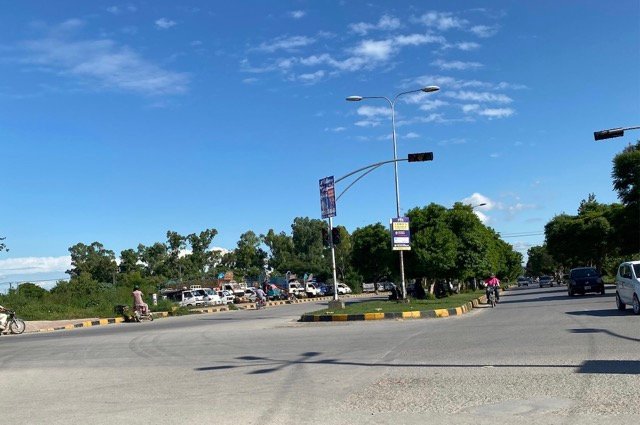
Islamabad - Pakistan's capital city
By Fatima Chaudhary
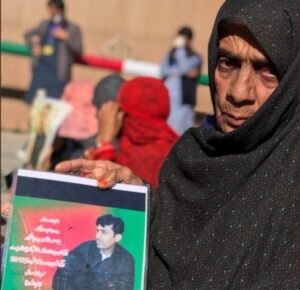
Pakistan’s two largest Muslim minorities, the Shia (notably Hazara Shia) and Ahmadis, have endured an unprecedented surge of violence and lynchings in the last couple of years. In November 2024 alone, over 40 Shia pilgrims were slaughtered in a single convoy ambush in Kurram District. Across Punjab and Sindh, mobs of hardline extremists have stormed Ahmadi prayer halls and beaten worshippers to death.
Human rights monitors warn that this is not a random crime but a full-fledged sectarian onslaught. Earlier this month, the Islamic State of Pakistan conducted a suicide attack on a famous Shia Mosque in the capital, Islamabad, which resulted in 32 casualties.[1] The core cadre base of IS-Pakistan comes from anti-Shia Sunni outfits like outlawed Sipaha-e-Sahaba(SSP) and Lashkar-i-Jhangvi (LeJ), among others.
Many analysts claimed that these radical Sunni outfits were likely behind the attack, as their activities have become more visible lately. Interestingly, a big gathering of LeJ was reportedly taking place in the vicinity of the Shia Mosque, which was attacked on February 6.
Under Field Marshal Syed Asim Munir’s leadership as the Army chief, Pakistan has seen a visible uptick in Sunni radicalization across the country. Consequently, religious minorities like Ahmadis and Shias are facing targeted violence, with no justice in sight.
Shia Muslims face particular danger in Balochistan and the northwest areas of Pakistan. In 2025, repeated ambushes on Shia convoys claimed dozens of lives. Similarly, in 2024, the minority community faced regular violent attacks, including the November attack in which gunmen targeted two convoys of Shia pilgrims in Kurram, killing at least 41 people, including women and children.
Just weeks earlier, sectarian clashes in the same region had left 15 dead. These attacks echo earlier massacres by banned terror groups like LeJ, which long targeted Shia with impunity. Despite this bloody pattern, authorities typically downplay motives. For example, police described a 2025 Kasur shooting of two Shia men as a “personal dispute,” yet the Shia community cried foul, warning that murderers are exploiting sectarian strife.
Amnesty International bluntly notes that “authorities have failed to protect the Hazara Shia community” from known threats and attacks. Provincial governments issue rhetorical condemnations, but no effective shield exists. As a result, Shia imambargahs and gatherings across Pakistan remain vulnerable as militant clerics incite Sunni mobs.
Ahmadis, declared non-Muslim by Pakistan’s constitution, suffer equally brutal fates at the hands of right-wing Sunni outfits. Since early 2025, mobs loyal to extremist blasphemy-enforcing parties have hunted them openly. On 18 April 2025, a mob of 100-200 Islamist demonstrators stormed an Ahmadi prayer hall in Karachi, dragged out a 47-year-old man, and beat him to death with bricks and sticks. Two months earlier, a 46-year-old Ahmadi businessman was lynched by Tehreek-e-Labbaik Pakistan (TLP) hardliners outside an Ahmadis’ hall in Saddar district of Karachi. In another chilling case, a prominent Ahmadi doctor, Dr. Sheikh Mahmood, was gunned down at his hospital workplace in Sargodha on 16 May 2025. Christian Solidarity Worldwide (CSW) notes these were the third and fourth targeted Ahmadi murders in a single month – part of a “distressing trend of targeted violence against Ahmadis”.
Across Pakistan’s media and streets, a common thread emerges that sectarian lynch-mobs operate in broad daylight while the state looks the other way. Police often stand by or even vow to shield accused mobs.
After the Karachi lynching of April 2025, police announced a murder case against the TLP attackers but simultaneously vowed that “no one will be spared” – implying accountability for everyone involved. Yet rights activists note that prosecutions never truly happen.
HRCP reports that even when killers of minority individuals are arrested, “people who preach and incite violence are not held accountable”. Blasphemy laws in particular remain a sword of Damocles as extremist Sunni clerics and lawyers’ forums routinely weaponize sections 298-A to C of the Pakistan Penal Code to accuse Ahmadis of “posing as Muslims”. Such charges often spark violent vigilantism.
Despite these incidents, Pakistan has officially banned no new violent sectarian groups, and even reinstated some after bans. Field Marshal Munir shows little sign of cracking down on these extremist elements. In fact, he is seen as aligned with the conservative religious establishment, a continuation of General Zia-ul-Haq’s legacy, leaving radical Barelvi networks (TLP and others) free to grow. No surprise, then, that analysts in Pakistan say mobs “are not made up of extremists alone”; ordinary citizens, stirred by radical clerics, join in attacks on minorities out of fear and prejudice.
International monitors have repeatedly condemned this persecution. The U.S. State Department’s latest human rights report notes multiple killings of faith minorities and stressed the authorities’ failure to protect them.
Amnesty International’s country report likewise calls out the “atmosphere of widespread hostility” that Pakistan’s constitutionally excluded Ahmadis face.
Historically, Pakistan has a long record of failing its Shia and Ahmadi citizens. The minorities’ killers often link arms with powerful forces. Even as the ruling coalition shifts between civilian parties and generals, one constant remains: hardline Sunni factions hold significant street power.
Today, both the intelligence agencies and some political parties tacitly allow anti-Shia and anti-Ahmadi agitation to continue. The Khatm-e-Nabuwwat movement (which spawned Pakistan’s blasphemy clauses) still conducts strikes and threats to intimidate judges and police.
In this environment, when a Shia procession comes under fire or an Ahmadi is dragged from his car, nobody comes to their rescue. The recent example is the Pakistani state’s ignorance of the February 6 terror attack on the Shia Mosque in Islamabad. As the families of the attack victims were grieving, media channels were directed to avoid reporting on the incident and rather focus on the Basant ‘Kite Festival’ in Lahore, Punjab.
These examples clearly show that the military-backed government does not care much about its religious minorities and would protect radical Sunni outfits. Given this scale of carnage, the international community should have demanded accountability from the Pakistan military leadership, since the civilian government is weak and powerless, to safeguard Ahmadis and Shias. Yet to date, there has been no solution to the problem as religious minorities continue to face repressive tactics from the majority. The blood of innocents, lynched or shot simply for their faith, continues to stain Pakistan’s conscience.
Fatima Chaudhary is a lecturer at a private university in Pakistan’s Punjab province.
Note: The contents of the article are of sole responsibility of the author. Afghan Diaspora Network will not be responsible for any inaccurate or incorrect statement in the articles.
[1] https://www.bbc.com/news/articles/cd6w69pj14xo